

Your Spanish app says you have a 47-day streak. Great. But can you ask your future in-laws about their weekend, explain a work problem to a client, or order lunch without switching back to English? That gap is exactly why people search for the best spanish courses adults can take to actually speak.
Adults do not need more random vocabulary cards. They need a course that respects their schedule, gives them a reason to talk, and helps them use Spanish when the conversation does not follow a script. The right option depends on your goal, but a few course features make a huge difference for nearly everyone.
What adults really need from a Spanish course
A good adult Spanish course should get you talking early. Not after six months of memorizing grammar charts. Not only when you feel “ready.” Speaking is part of how you become ready.
That means hearing a real person respond to you, correcting the pronunciation that changes what you mean, and helping you find another way to say something when a word disappears from your brain. Those little moments are where confidence grows.
Adults also learn better when lessons connect to a real purpose. A traveler needs directions, restaurant conversations, and the confidence to handle surprises. A professional may need to introduce services, make small talk, or speak clearly in a meeting. Someone learning for a relationship needs casual, warm language that textbooks often skip.
The best course will not force all three people through the exact same lesson at the exact same pace.
The best Spanish courses for adults have live speaking built in
Self-paced courses can be useful for a quick review or a few minutes of practice while waiting in line. They are not useless. But they have a limit: an app cannot have a natural conversation with you, notice why you keep mixing up two sounds, or adjust a lesson because you are flying to Mexico City next month.
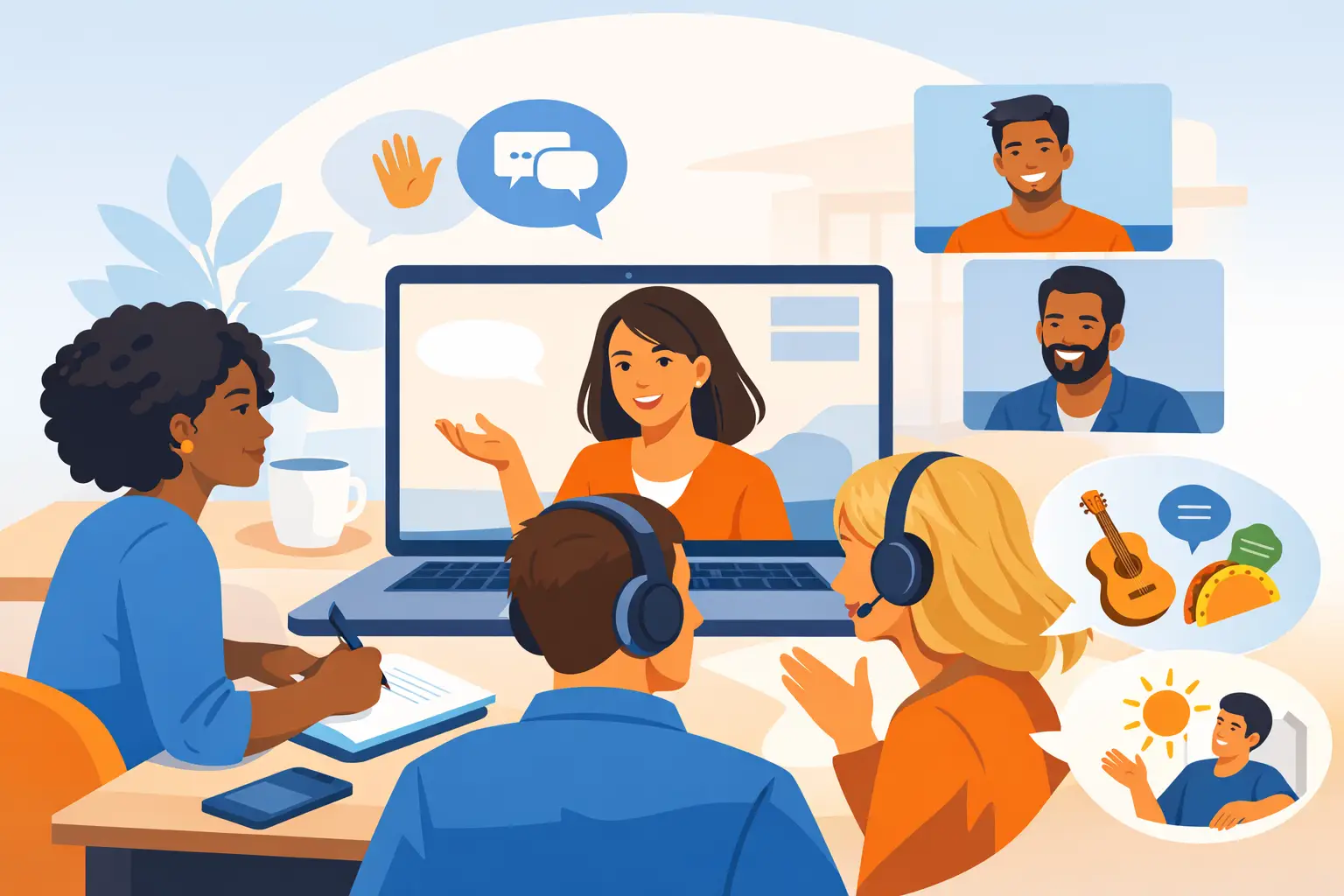
Live instruction changes the experience. You get immediate feedback before mistakes become habits. You practice listening to a real voice at a real speed. Most importantly, you learn to respond instead of simply recognize the correct answer on a screen.
For adults with busy lives, live online lessons can be especially practical. There is no commute, no need to rearrange an entire evening, and no pressure to sit in a crowded classroom hoping your turn to speak eventually comes around. Private lessons offer the most flexibility, while small groups can be a good fit if you enjoy learning alongside others and want a lower-cost format.
Private lessons: best for specific goals
Private instruction is usually the strongest choice if you have a deadline or a clear reason for learning Spanish. Maybe you are preparing for a move, communicating with Spanish-speaking customers, visiting family, or planning a trip where you want to do more than point at a menu.
With one-on-one lessons, the teacher can build practice around your life. You might role-play a hotel check-in one week and work on a presentation the next. You can spend extra time on pronunciation, verb tenses, or listening without holding anyone else back.
The trade-off is price. Personalized lessons typically cost more than a large class or subscription app. Still, they can be better value if they help you reach a usable speaking level faster instead of keeping you stuck in beginner mode for a year.
Small group courses: best for structure and community
A small group course gives you a schedule, a path through the language, and other learners who understand why saying one sentence can feel like a victory. It is a solid fit if you like routine and want to practice conversations with more than one speaker.
Look for truly small groups, not a virtual room packed with silent students. You need enough talking time to make the class worth it. Ask how often students speak during a typical lesson and whether the instructor gives individual feedback.
Group courses are less flexible than private lessons. If the class is moving faster or slower than you need, you may have to do extra work outside class. For many learners, though, that weekly commitment is exactly what keeps momentum alive.
Choose Latin American Spanish if it matches your life
Spanish is spoken across many countries, so no single course can teach every accent, phrase, and cultural habit. That is normal. The smart move is to choose the variety of Spanish that fits where you will use it most.
For many US adults, Latin American Spanish is the most practical place to start. It is useful for travel throughout Latin America, everyday conversations in US communities, family connections, and many workplace situations. You will still understand Spanish from Spain over time, but your first course should give you a consistent foundation rather than throwing every regional variation at you at once.
Culture matters here, too. Knowing the literal translation of a phrase is not always enough. You also need to know whether it sounds formal, friendly, too direct, outdated, or different in Colombia than in Argentina. A native bilingual teacher can explain those details in plain English, then help you use them naturally in Spanish.
How to compare the best Spanish courses for adults
Before you enroll, skip the flashy promises and look at what happens in the actual lessons. A course can have polished videos, colorful worksheets, and thousands of five-star reviews but still leave you unable to hold a conversation.
Ask these questions:
- How much of each lesson is spent speaking out loud?
- Will a real teacher correct my pronunciation and grammar?
- Can lessons adapt to my level and goals?
- Does the course teach everyday language, not just textbook dialogues?
- Is there a clear path from beginner basics to more natural conversation?
You also want a course that makes progress visible. That does not mean obsessing over a score. It means knowing what you can do now that you could not do a month ago: introduce yourself comfortably, make plans, describe your work, tell a short story, or understand a voice message without panicking.
Be careful with courses that promise fluency in a few weeks. You can absolutely make meaningful progress quickly, especially with consistent speaking practice. Fluency, though, is built through repetition, correction, listening, and real conversations over time. A good teacher will motivate you without selling a fantasy.
Your schedule matters more than your motivation speech
Most adults do not quit because they are lazy. They quit because the course asks for a perfect schedule they do not have.
Choose a format you can repeat. Two live lessons a week plus short practice between sessions can be more effective than one exhausting Saturday class that you start canceling after a month. If your work hours change often, look for flexible scheduling. If you need accountability, choose fixed times and treat them like an appointment you would not miss.
Between lessons, keep practice simple. Replay useful phrases out loud. Send yourself a voice note describing your day. Label a few items around your home. Watch a short Spanish video and listen for words you already know. The goal is not to turn every free minute into homework. It is to keep Spanish present enough that your next conversation feels familiar, not like starting over.
A course should make speaking feel less scary
The right Spanish course will challenge you, but it should not make you feel foolish for being a beginner. Adults often carry embarrassment into language learning because they are used to being competent at work and in everyday life. Suddenly, they cannot say what they mean. That can feel frustrating.
A supportive teacher knows how to push without shutting you down. They let you finish your thought, show you a clearer way to say it, and bring the same language back later until it starts to stick. You are not looking for someone to lecture at you. You are looking for a coach who keeps the conversation moving.
That is the idea behind AmigoProf: real-time Spanish with bilingual native teachers who personalize practice around your reasons for learning, from travel and relationships to business and everyday life.
Start with the course format you will genuinely attend, a teacher you feel comfortable speaking with, and a goal that matters outside the lesson. Your first imperfect conversation may not sound polished. It will sound like progress – and that is where Spanish starts becoming yours.