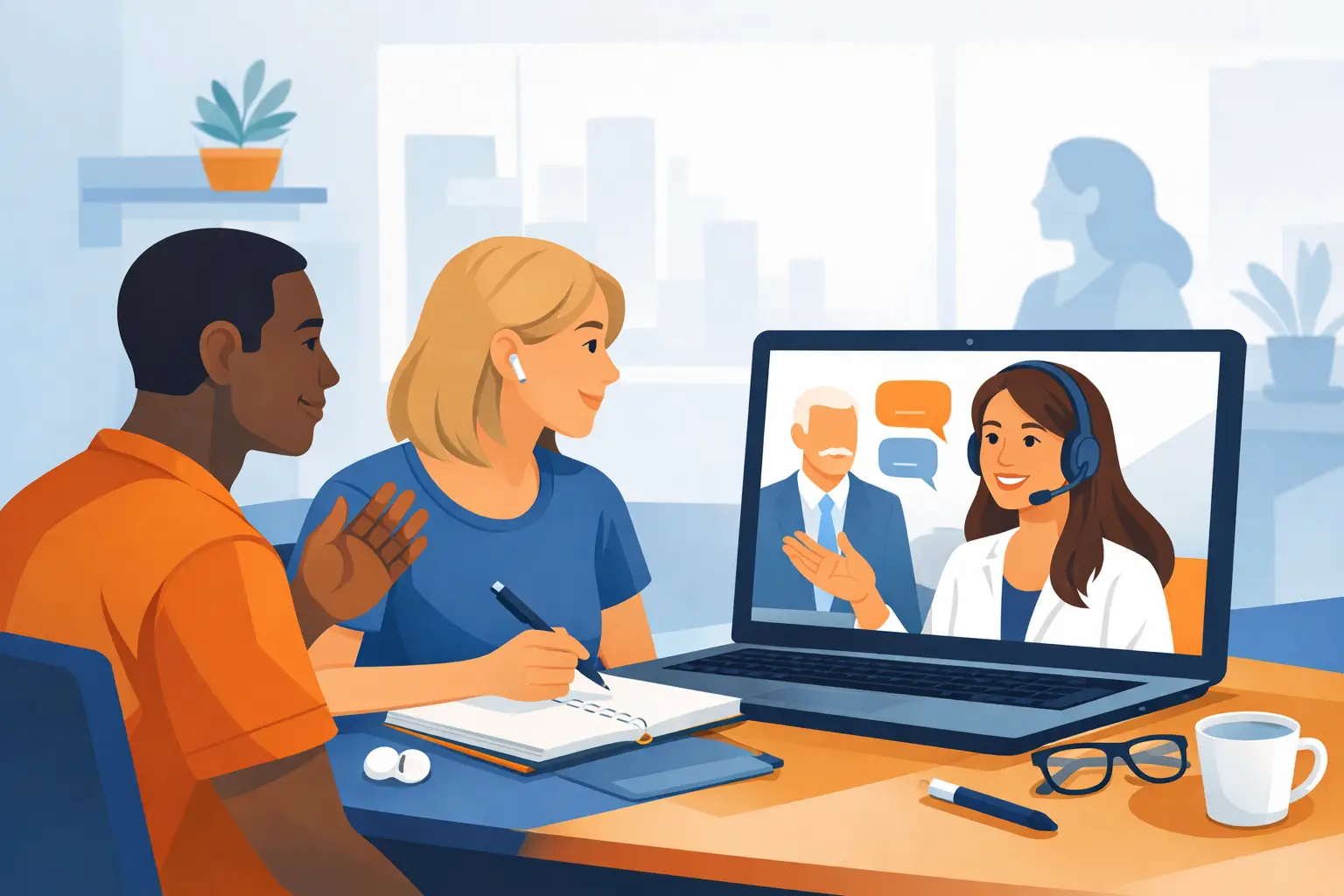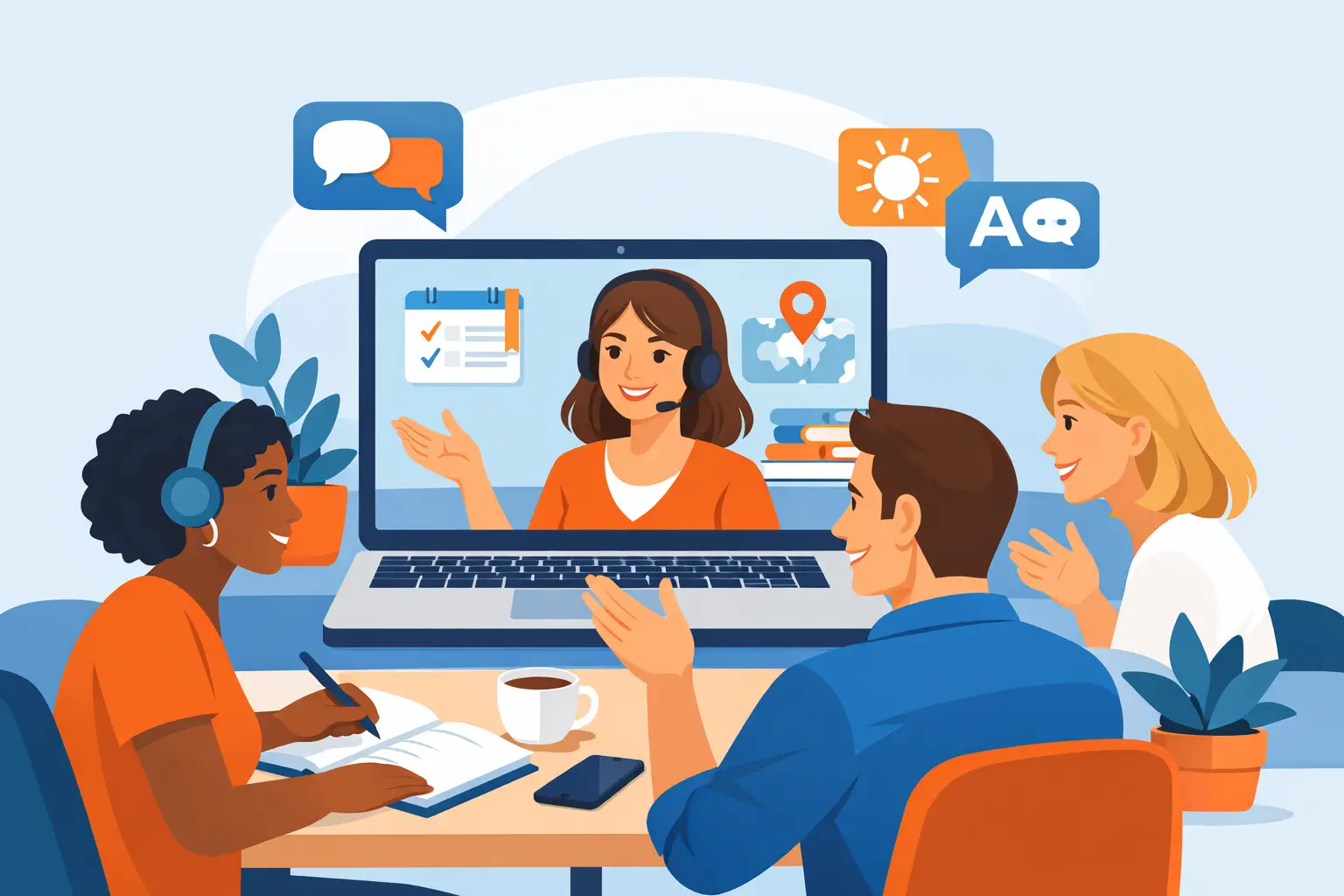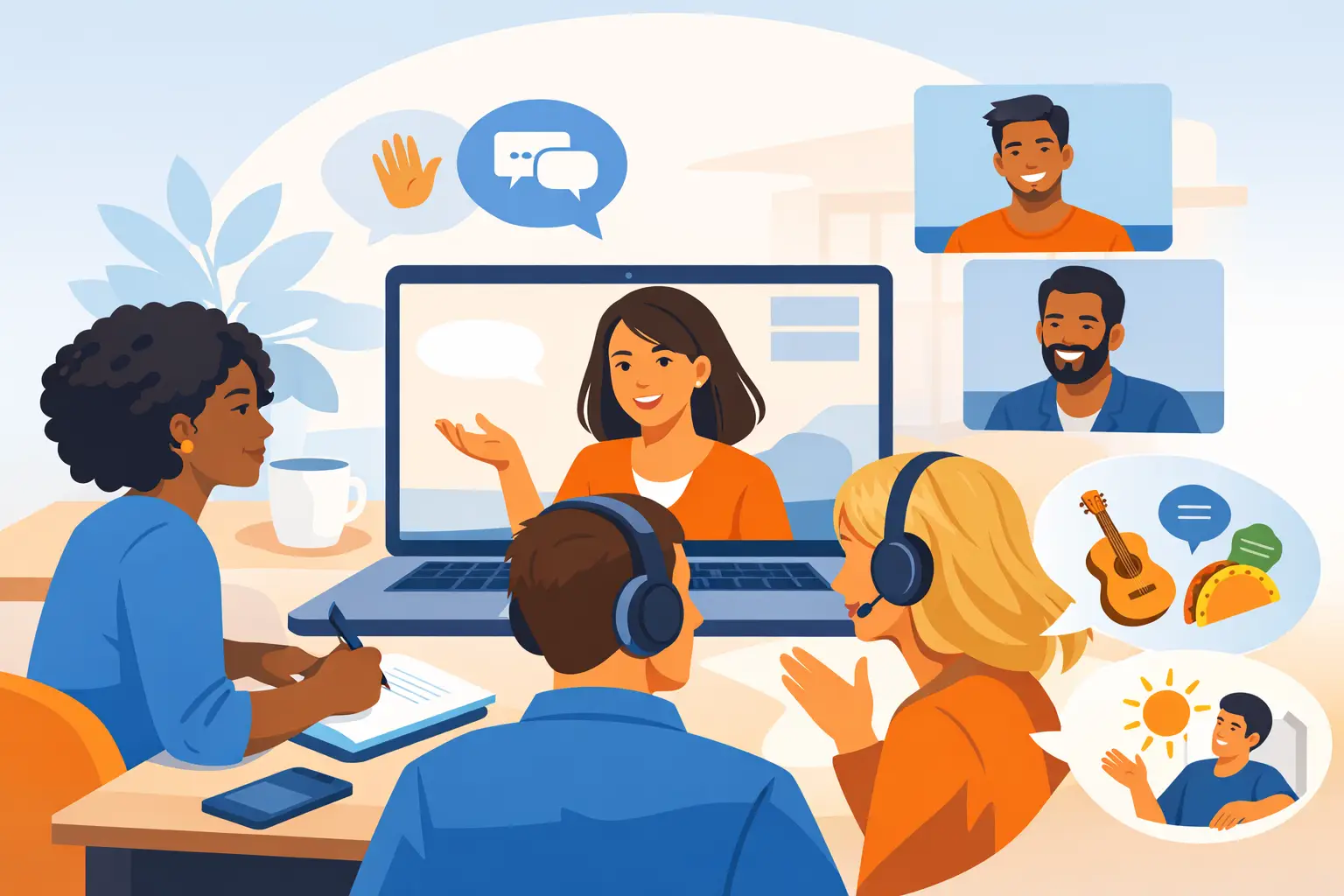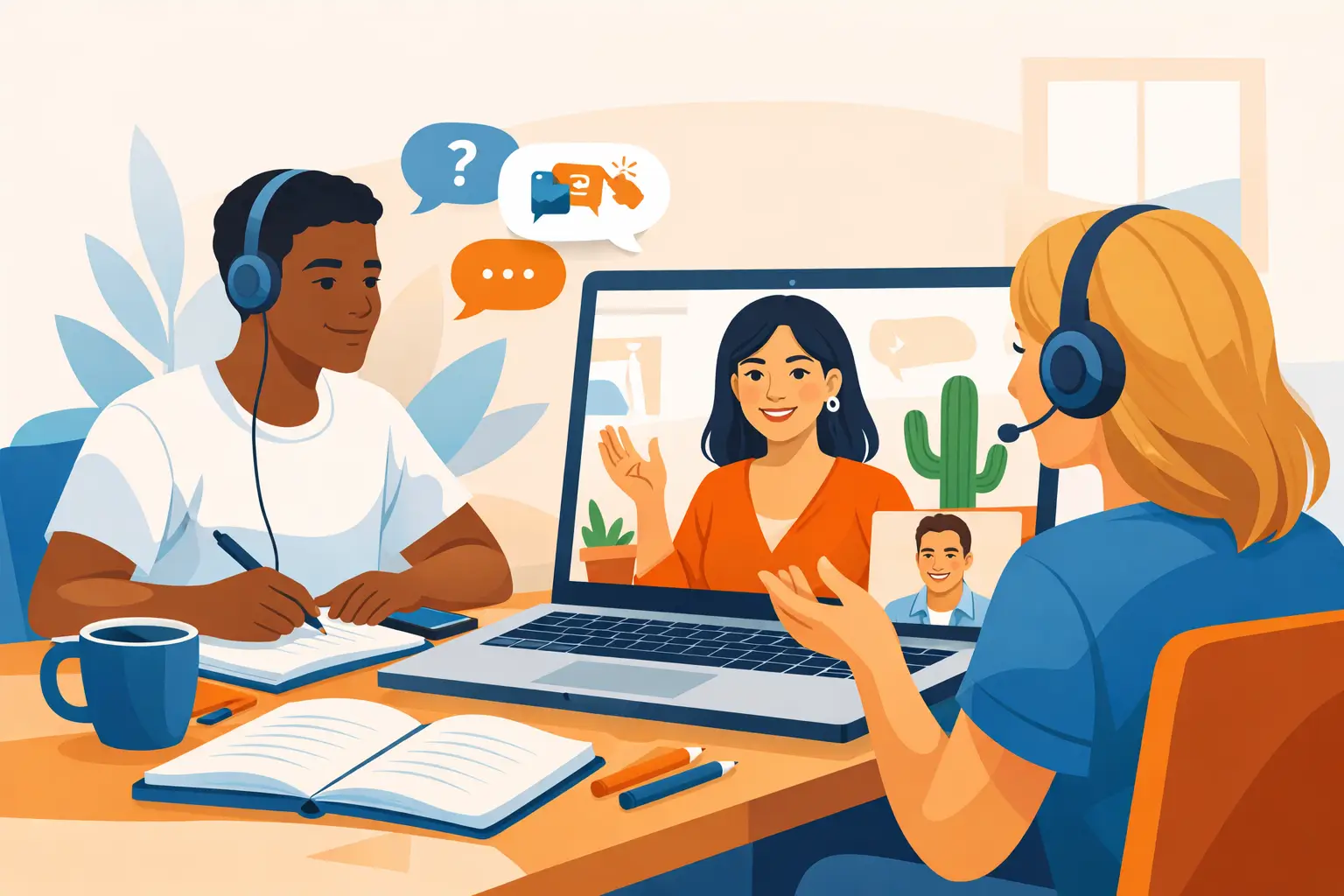


You can finish a dozen app lessons and still freeze when someone asks, “¿Cómo estás?” That gap is exactly why private Spanish lessons online can change the way you learn. Instead of tapping through phrases alone, you get a real person who hears what you mean to say, helps you say it naturally, and keeps the conversation moving.
For most adults, the goal is not to memorize every grammar rule before speaking. It is to order food without panic, talk to your partner’s family, handle a client call, ask for directions, or make friends on a trip. Private instruction gives you a faster path because your Spanish is built around your life, not a generic lesson sequence designed for everyone.
Why private Spanish lessons online work differently
A live private lesson puts speaking at the center from day one. Your teacher can slow down when a sound feels impossible, speed up when you are ready, and explain why a phrase you learned from an app might sound too formal, too literal, or just plain strange in Mexico, Colombia, Argentina, or another part of Latin America.
That immediate feedback matters. If you say “Tengo 30 años” with English pronunciation, a teacher can help you adjust in the moment. If you translate “I am excited” word for word, they can show you the phrase people actually use. Those small corrections add up quickly because they happen while you are communicating, not weeks later after a quiz.
Private lessons are also more flexible than a one-size-fits-all course. A traveler may need restaurant language, taxi conversations, and polite ways to ask for help. A professional may need to introduce a project, make small talk with colleagues, or understand a client’s accent. Someone dating a Spanish speaker may want everyday conversation, family vocabulary, and the confidence to join the table instead of smiling silently through dinner.
The lesson should follow the goal. Grammar still has a place, but it becomes a tool for saying more, not a wall you have to climb before you are allowed to talk.
What a good online Spanish teacher actually does
The best teacher is not someone who talks at you for an hour. They are a coach, conversation partner, pronunciation guide, and patient problem-solver all at once. They notice the patterns behind your mistakes and create practice that makes sense for your level.
For a beginner, that may mean practicing a short introduction until it feels automatic: where you are from, what you do, what you like, and why you are learning Spanish. For an intermediate learner, it may mean telling stories in the past, reacting naturally when someone speaks quickly, or learning how to keep a conversation alive when you do not understand every word.
A strong teacher also brings cultural context. Latin American Spanish is not a single, identical version of the language. Vocabulary, pronunciation, humor, and everyday expressions shift by country and region. You do not need to copy every local slang word, but you do need enough context to avoid sounding like a textbook from 1998.
That is where real human instruction beats automated correction. A program can tell you whether you selected the expected answer. A teacher can tell you whether your answer sounds warm, stiff, playful, direct, or confusing in a real conversation.
You get correction without losing your confidence
Many learners avoid speaking because they do not want to make mistakes. The funny thing is that avoiding mistakes is also how people stay stuck. In a private setting, mistakes become useful information, not a public embarrassment.
A good teacher does not interrupt every sentence until you lose your train of thought. They choose what to correct based on what will help you most. Sometimes that means letting you finish your story and then reviewing two key errors. Other times, it means stopping for a quick pronunciation adjustment before the wrong habit gets stronger.
You should leave a lesson feeling challenged but capable. If every class feels easy, you are probably not stretching. If every class feels overwhelming, the pace or material needs to change. Personalization is not just choosing vocabulary topics. It is finding the right level of push.
How to choose private Spanish lessons online
Before you commit, get clear on the kind of Spanish you want to use. “I want to learn Spanish” is a great starting point, but it is not yet a plan. Think about the conversations you want to have in the next three to six months.
Do you want to feel comfortable during a trip to Peru? Are you preparing for a job opportunity? Do you need Spanish for healthcare, customer service, school, or a relationship? Your answer helps a teacher choose useful language from the beginning.
Then look for live, real-time interaction. Recorded courses can support your learning, especially for reviewing vocabulary between sessions, but they cannot respond when you hesitate, misunderstand a question, or need a different explanation. Speaking improves through speaking with someone who can meet you where you are.
It also helps to ask how lessons are planned. Some students thrive with a structured course that moves from basic foundations to more advanced communication. Others need a targeted plan around work, travel, or a specific exam. The sweet spot is usually both: enough structure to see progress and enough flexibility to make every lesson feel relevant.
Consistency matters more than marathon sessions. One focused lesson each week, plus short practice between classes, can create real momentum. Two or three lessons a week may be better if you have a deadline, but only if your schedule allows time to review and use what you learn. There is no magic number. The best schedule is the one you can keep.
Make your lessons pay off between sessions
Your teacher gives you direction, but your progress grows in the small moments after class. Spend ten minutes reviewing new phrases while they are still fresh. Say them out loud, not just in your head. Your mouth needs practice too.
Use Spanish in tiny, low-pressure ways during the week. Narrate what you are doing while making coffee. Send yourself a voice note about your day. Change a few settings on your phone. Watch a short video and listen for one phrase you recognize. The point is not to create a perfect immersion routine. It is to make Spanish feel less like a school subject and more like something you use.
Bring real questions to your next lesson. Maybe you heard a phrase in a song, got a confusing message from a friend, or did not know how to respond to a coworker. Those are great lesson materials because they connect directly to the Spanish happening around you.
If you are nervous about speaking, ask for more conversation practice early. Do not wait until you “know enough.” Your teacher can adjust the difficulty with slower speech, useful sentence frames, role-play, or guided questions. Confidence does not arrive first and then allow you to speak. Speaking, a little imperfectly and repeatedly, is what builds confidence.
Learn Spanish with a person in your corner
Apps can be handy for a quick vocabulary review. Videos can introduce you to new accents. But neither replaces the feeling of having a teacher who knows your goals, notices your progress, and says, “Try that again – you are closer than you think.”
At AmigoProf, private lessons focus on practical Latin American Spanish with live teachers who can help you move from recognizing words to actually using them. That means real conversation, useful corrections, cultural insight, and a plan that fits the reason you started learning in the first place.
You do not need perfect Spanish to begin a conversation. You need a few useful words, a little courage, and someone who will help you keep going when the conversation gets real.