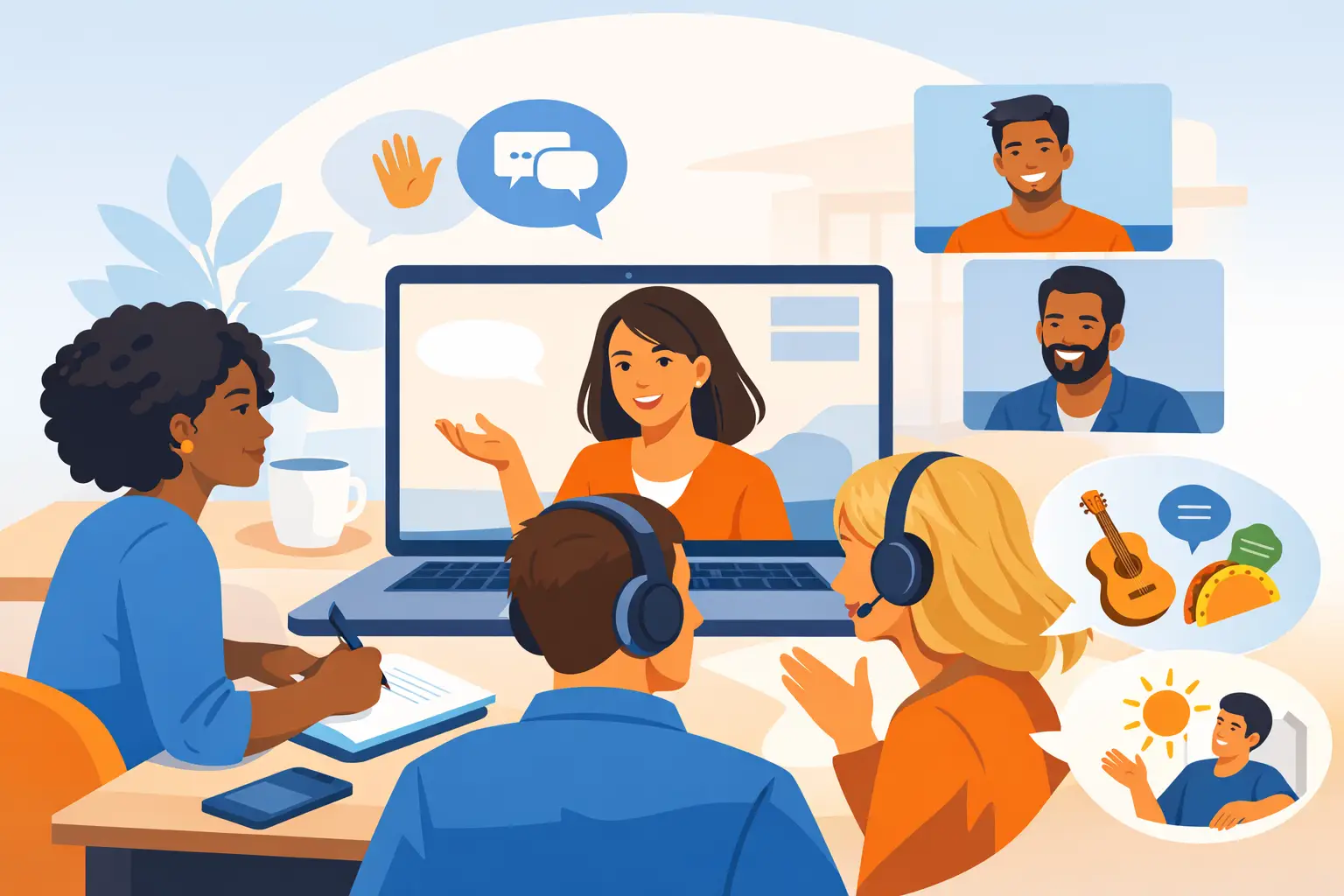

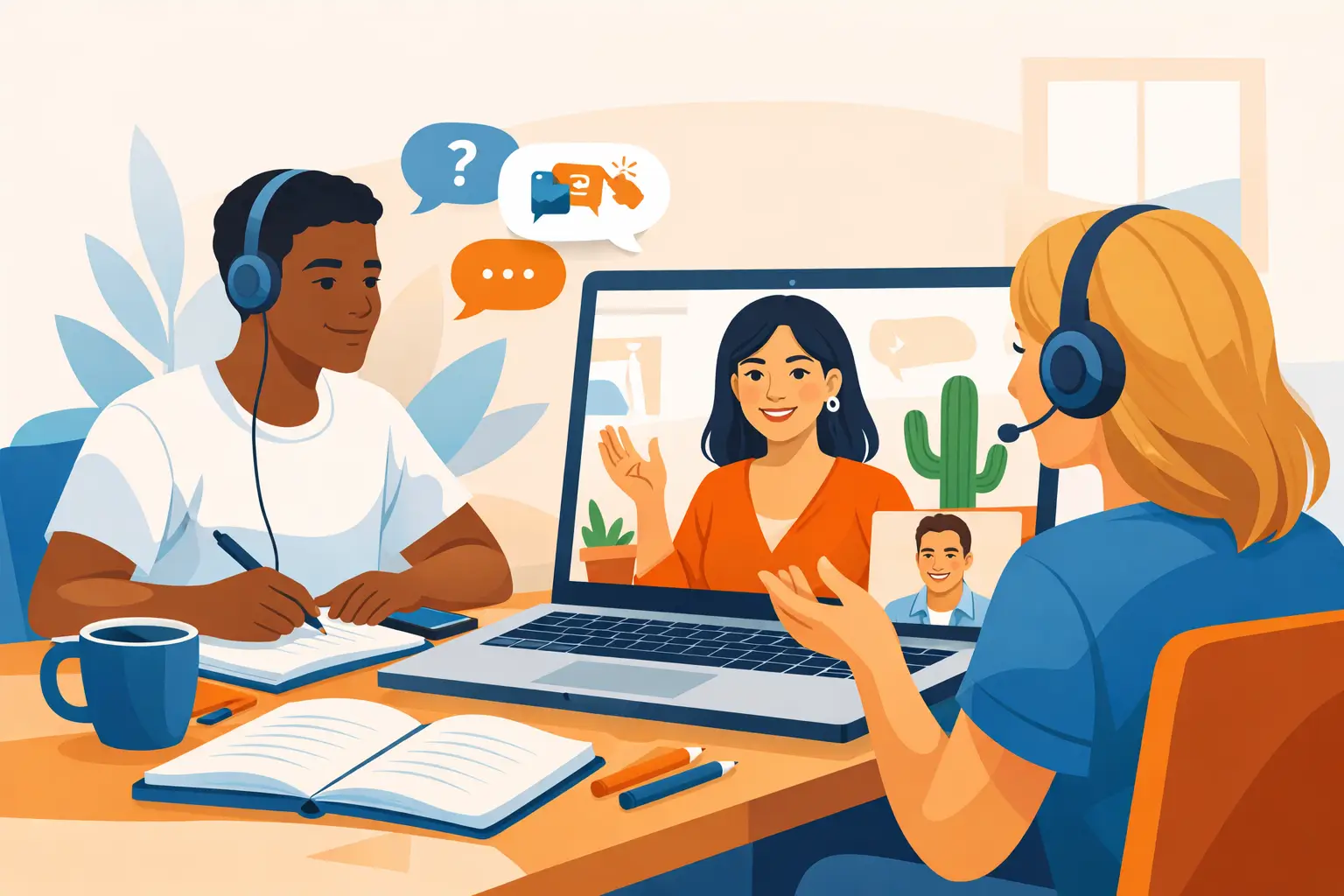
You can finish a streak on an app, recognize a few words on a menu, and still freeze when your partner’s family asks, “¿Cómo has estado?” That gap is exactly why people who want to learn Mexican Spanish online need more than flashcards and prerecorded videos. You need to practice the moment where Spanish becomes a real conversation with a real person.
Mexican Spanish is lively, warm, expressive, and full of everyday phrases that rarely show up in a generic course. The right online learning experience helps you speak clearly, understand how people actually communicate, and feel comfortable making mistakes while you improve.
Why Mexican Spanish deserves its own focus
Spanish is spoken across more than 20 countries, and the basics travel well. You can build sentences, ask for directions, order food, and introduce yourself with standard Spanish almost anywhere. But once you start talking with native speakers, regional language matters.
Mexican Spanish has its own accent patterns, vocabulary, humor, and social cues. Words such as órale, mande, ahorita, and qué padre carry meaning that goes beyond a direct translation. Even a simple word like ahorita can mean “right now,” “in a little while,” or “not immediately,” depending on context, tone, and the situation.
That does not mean you need to memorize slang before learning the basics. It means your lessons should prepare you for the Spanish you will hear in Mexico, Mexican-American communities, restaurants, workplaces, family gatherings, and travel situations. A good teacher knows when to teach standard Spanish first and when to add the local expression that makes the conversation sound natural.
How to learn Mexican Spanish online without getting stuck
The fastest path is not one magic platform. It is a routine that gets you using the language often, with feedback from someone who can tell you what is working and what needs adjustment.
Apps can be useful for quick vocabulary review. Podcasts can train your ear. Videos can expose you to different voices and accents. But these tools cannot pause the conversation, notice that you are avoiding the past tense, or help you say a sentence again until it sounds like something you would actually say.
Live instruction fills that gap. With a bilingual native Spanish teacher, you can ask, “Would people really say this in Mexico?” You can practice an upcoming trip to Mexico City, rehearse a conversation with a client, or learn the phrases you need to connect with your in-laws. The lesson becomes about your life, not a fictional character buying a train ticket for the tenth time.
Start with the Spanish you will use first
Beginners often think they must finish every grammar topic before they are allowed to speak. That is a frustrating way to learn. You need a foundation, yes, but you also need useful wins early on.
If you are traveling, start with greetings, directions, restaurants, transportation, money, and polite ways to ask for help. If you have Spanish-speaking coworkers, practice introductions, small talk, scheduling, and the vocabulary from your actual job. If your goal is family connection, focus on the questions, stories, and affectionate expressions you are likely to hear at the dinner table.
Grammar still belongs in the plan. It just works better when it supports a conversation you care about. Learning the present tense makes more sense when you are talking about your routine. Learning the past tense gets easier when you are telling your teacher about your weekend.
Speak in every lesson, even at the beginner level
You do not need perfect pronunciation to start talking. In fact, waiting for perfection is one of the most reliable ways to stay quiet.
A supportive teacher can guide a beginner through short exchanges: saying who you are, where you live, what you like, and what you need. As your confidence grows, those exchanges turn into longer answers, follow-up questions, opinions, and stories. That progression matters because real conversations do not come with multiple-choice answers.
Speaking live also reveals what you truly know. You may recognize tengo hambre on a screen, but can you use it naturally when someone asks what you want for lunch? Can you understand the reply when it comes quickly? Regular conversation practice turns recognition into a usable skill.
Train your ear for natural speed
Textbook Spanish is usually clean and carefully paced. Everyday Mexican Spanish is not always like that. People connect words, use fillers, change direction mid-sentence, and speak at different speeds depending on the setting.
Listening practice should include clear material at your current level, followed by natural conversation that stretches you a little. The goal is not to understand every single word. The goal is to catch the main idea, recognize familiar phrases, and keep moving without panicking.
A live teacher can help you work through the tricky parts. Maybe you heard ¿mande? and assumed someone was giving an order. In much of Mexico, it is a polite way to say “Pardon?” or “What did you say?” Those small cultural details make listening feel much less confusing.
What a personalized online lesson should feel like
A great online class should not feel like being lectured at through a screen. It should feel like showing up to practice with a coach who knows your level, remembers your goals, and pushes you enough to make progress.
That means your teacher may correct your word order, then ask you to try the sentence again in a new situation. They may explain why ser and estar are different, but they should also help you use both in a conversation about your city, mood, work, or weekend plans. They should introduce Mexican vocabulary without pretending there is only one “correct” Spanish for every country.
Personalization also means adapting the pace. Some students want a structured path from basic to advanced. Others need a focused plan before a move, a vacation, a job interview, or a relationship milestone. Neither approach is better. It depends on your timeline and how much speaking practice you can realistically fit into your week.
At AmigoProf, live lessons are built around that human side of learning: direct conversation, practical goals, and teachers who can explain Spanish in a way that makes sense to English speakers. For busy learners, phone-based Spanish practice can also be a simple way to keep talking when a full video lesson is not possible.
Build a routine you can actually keep
Consistency beats the occasional three-hour study marathon. If you can take live lessons once or twice a week, protect that time. Between lessons, spend short sessions reviewing vocabulary from your own conversations, listening to Mexican Spanish, and saying a few sentences out loud.
Keep a small list of phrases you want to use, not just words you want to recognize. Instead of writing only trabajo, write: Trabajo desde casa los lunes or ¿Dónde trabajas tú? Full phrases give your brain a pattern it can reuse.
It also helps to expect awkward moments. You will mix up verbs. You will forget a word you knew yesterday. You may accidentally use a phrase from another country. None of that means you are bad at Spanish. It means you are doing the active, sometimes messy work that apps cannot do for you.
Learn Mexican Spanish online for real connection
The real payoff is not getting a perfect score. It is understanding the joke, joining the family conversation, asking a better question at work, or feeling at home when you travel. Mexican Spanish gives you access to people, stories, music, food, humor, and everyday moments that are much more enjoyable when you can participate instead of simply observe.
Start where you are. Bring your actual goals to the lesson. Then keep showing up, speaking before you feel fully ready, and letting a real teacher help you turn “I know a little Spanish” into “I can have this conversation.”