

Your cousin in Mexico sends a voice note. Your coworker asks a simple question in Spanish. The hotel receptionist starts speaking a little faster than expected. In those moments, knowing that you recognized words on a screen is not quite the same as being able to answer.
That is the real question behind apps vs live Spanish classes. Both can put Spanish in your day. Both can help you learn vocabulary. But they build different skills, and the better choice depends on what you want to do when a real person starts talking back.
Apps vs Live Spanish Classes: The Real Difference
Apps are built for convenience. You can practice for five minutes while waiting for coffee, review flashcards on a flight, or keep a streak going before bed. For a total beginner, that kind of low-pressure exposure can make Spanish feel less intimidating. You will pick up common words, basic sentence patterns, and a sense of the language’s rhythm.
The problem shows up when your goal moves from recognizing Spanish to using it. An app can tell you that your answer matched its expected response. It cannot always tell you why a native speaker looked confused, why your pronunciation changed the meaning, or how to recover when you forget a word halfway through a sentence.
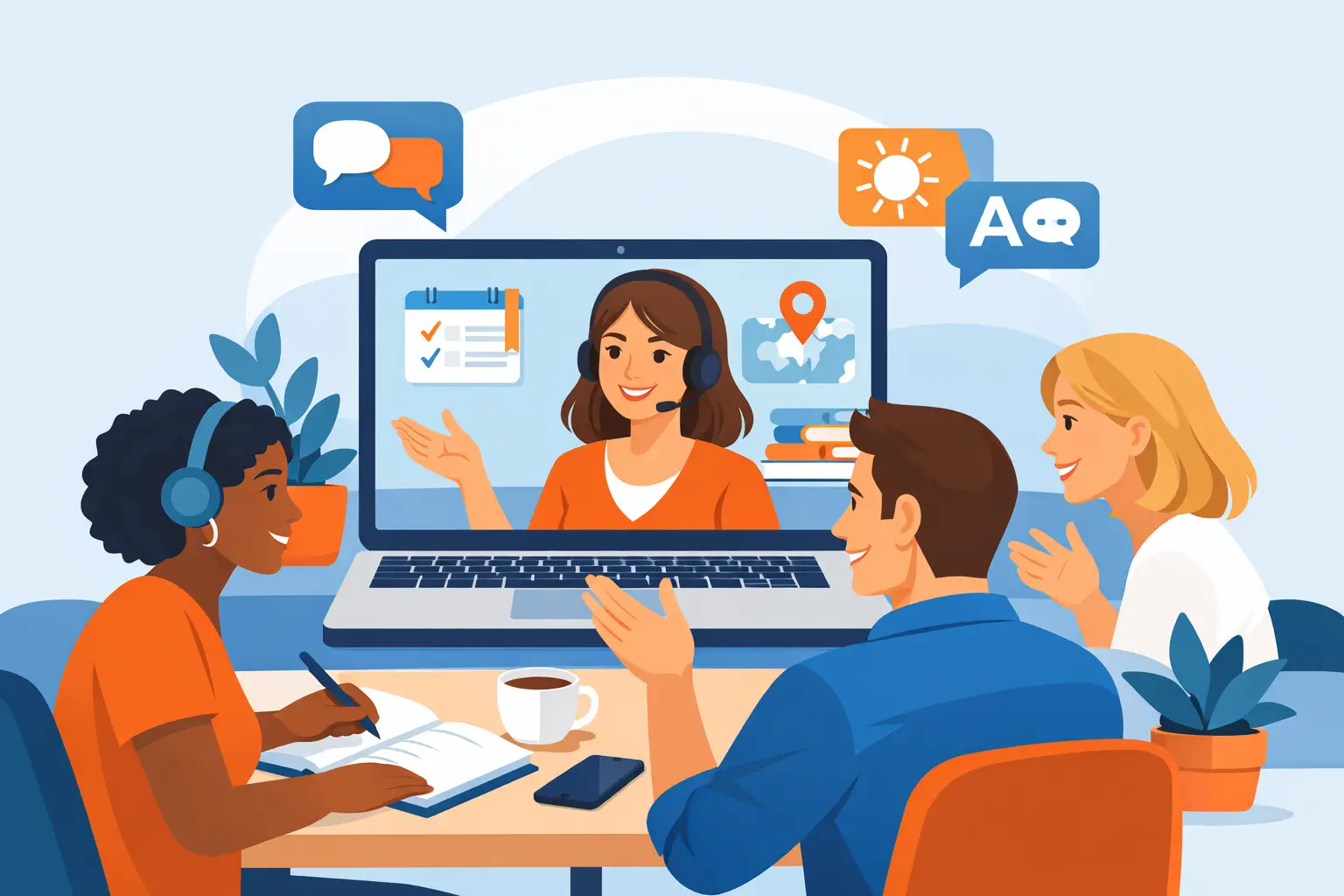
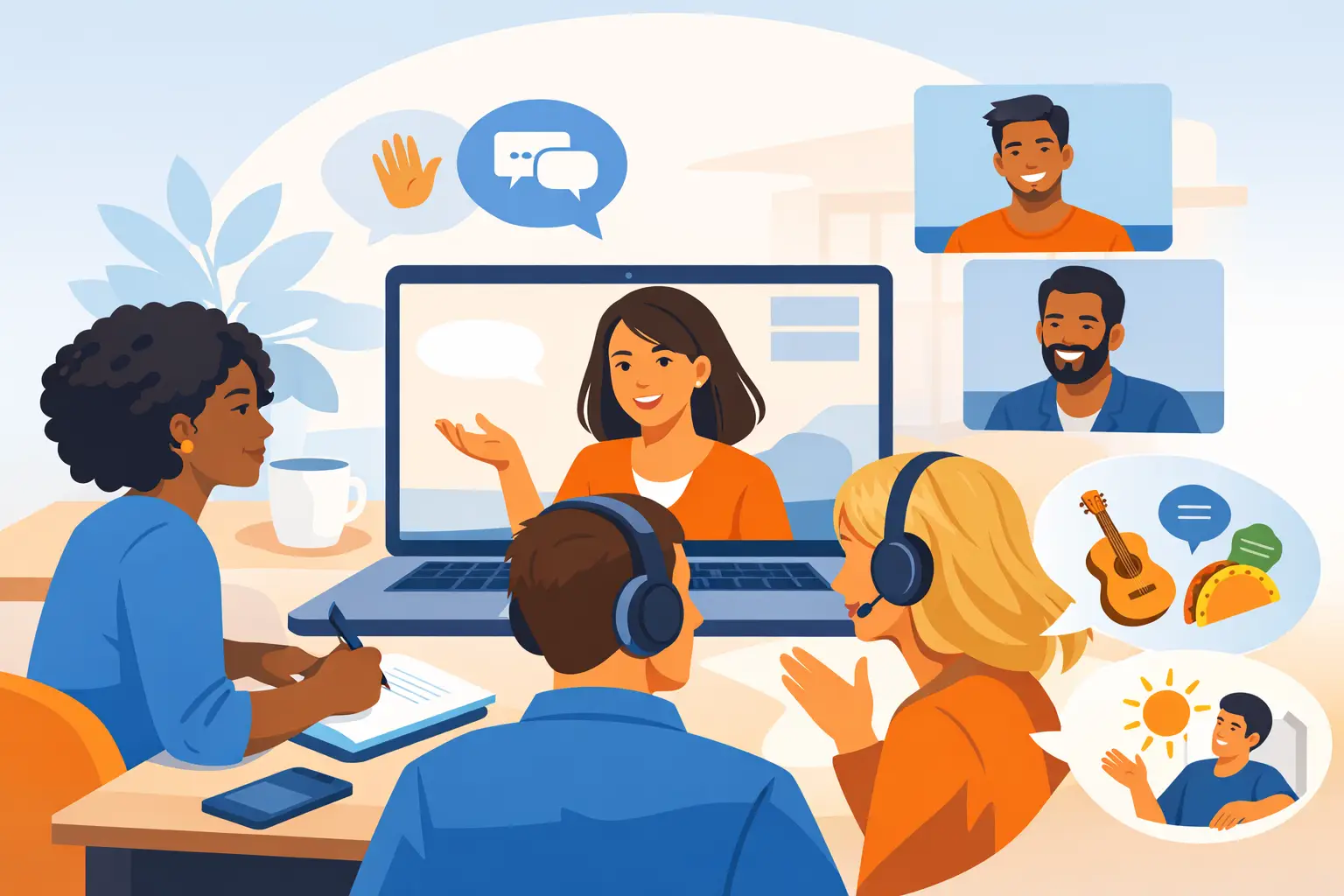
Live classes are built around that messy, valuable middle ground. You speak, hesitate, make a mistake, get corrected, try again, and realize you survived the conversation. A real teacher adjusts the lesson when you need more practice with the past tense, when you keep mixing up ser and estar, or when your trip to Colombia is three weeks away and you need restaurant Spanish now.
That does not make apps useless. It means they are a tool, not a complete conversation partner.
What Apps Do Well
A good app earns its place in a Spanish routine because repetition matters. Seeing and hearing words often helps them stick. Short exercises can also make it easier to build a daily habit, especially if your schedule is packed and you have trouble protecting a full hour for study.
Apps are especially helpful for reviewing vocabulary between lessons. If you just learned how to talk about your family, work, or weekend plans, a few minutes of review can keep those words fresh. They are also useful when you want a quiet way to practice listening or spelling without worrying about getting something wrong in front of another person.
For some learners, an app is the easiest first step. It gives you proof that Spanish is learnable. That confidence can be enough to get you moving.
Still, apps tend to follow a preset path. They may teach vocabulary about a train station when you really need to talk to your partner’s parents. They may reward a perfect translation of a sentence you would never actually say. And they usually cannot recognize that you understand the lesson but freeze when it is time to speak.
Why Live Classes Build Speaking Confidence Faster
Speaking is not a multiple-choice activity. It is a live skill. You need to understand what someone says, choose a response, pronounce it clearly enough, and stay calm when the conversation takes a turn you did not expect.
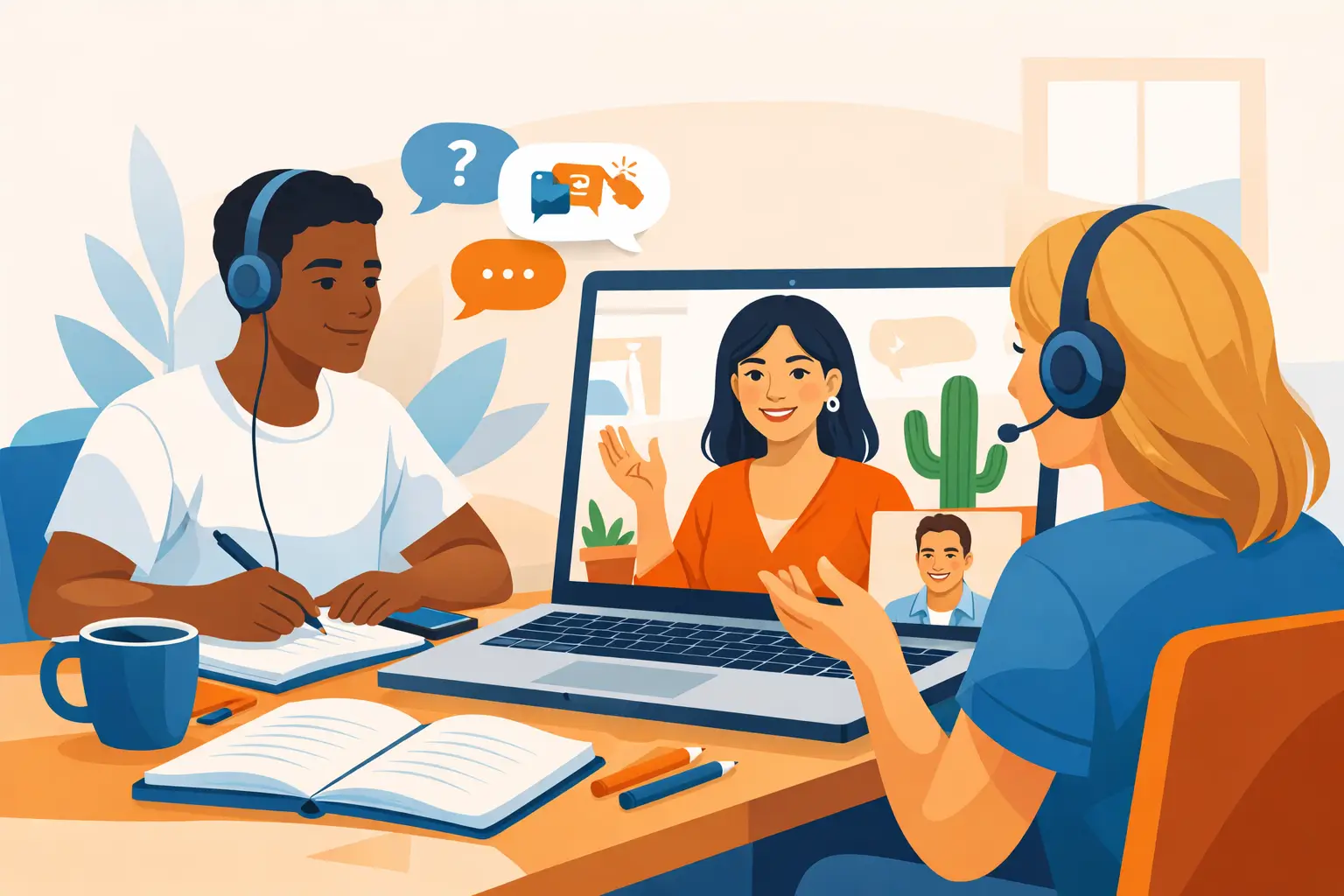
A live teacher helps you practice all of that in real time. If you say, “Yo soy cansado,” a teacher can explain the correction, “Estoy cansado,” and give you a quick, memorable reason. Better yet, they can ask follow-up questions until using estar starts to feel natural instead of memorized.
That immediate feedback is hard to replace. Small mistakes can become habits when nobody catches them. Pronunciation is a perfect example. You might read a word correctly in your head for months, then learn you have been stressing the wrong syllable or using an English sound that changes how people hear you. A bilingual native Spanish-speaking teacher can hear the issue and coach you through it without making you feel embarrassed.
Live instruction also creates accountability. It is easy to skip an app lesson and tell yourself you will make it up tomorrow. When you have a class scheduled with a teacher who knows your goals, showing up feels more meaningful. You have someone in your corner who can notice your progress and keep you moving when motivation dips.
The Cultural Piece an App Cannot Fully Teach
Spanish is spoken across many countries, communities, and cultures. A phrase that sounds normal in one place may sound overly formal, outdated, or confusing somewhere else. If you are learning Latin American Spanish for travel, work, family, or relationships, you need more than a direct translation.
You need to know what people actually say.
A live instructor can teach you when to use qué tal versus cómo estás, how to soften a request, what slang is friendly in context, and which expressions are best avoided outside a particular region. They can help you understand why a conversation sounds warm, blunt, playful, or formal. That is the difference between sounding like you completed a lesson and sounding comfortable with people.
This matters even more when your Spanish has a specific purpose. A business professional may need to make small talk before a meeting. A traveler may need to handle a missed reservation. Someone dating a Spanish speaker may want to join family conversations without relying on their partner as a translator. Generic exercises cannot always prepare you for those situations. Personalized conversation practice can.
When an App May Be Enough
If you are learning Spanish casually and have no immediate need to speak, an app may be enough for now. Maybe you are curious about the language, want to understand song lyrics a little better, or simply enjoy learning new words during your commute. There is nothing wrong with that.
An app can also work well as a supplement if you already get speaking practice elsewhere. Perhaps you speak Spanish at home, have friends who patiently practice with you, or attend regular live lessons. In that case, app drills can reinforce what you are already using.
But if you have spent months collecting points and still cannot order lunch, introduce yourself naturally, or understand a simple reply, the issue is not that you are bad at Spanish. You probably need more real interaction.
How to Choose the Right Option for Your Goal
Start with the situation you want Spanish for. If you want a flexible daily habit and basic vocabulary, use an app. If you want to speak with confidence on a trip, communicate with clients, pass an interview, connect with family, or hold actual conversations, prioritize live classes.
Your learning style matters too. Some people love independent study and can organize their own routine. Others need a clear plan, encouragement, and someone to explain the “why” behind a correction. Neither approach is better as a personality trait. The key is choosing a setup you will use consistently.
Budget and time are real considerations. Apps are generally cheaper, and they are available at any hour. Live classes cost more because a skilled human is preparing, listening, adapting, and teaching you. But consider what you are paying for: not just information, but feedback, conversation, cultural context, and a path built around your life.
For many learners, the strongest approach is not either-or. Use an app for quick review, then use live lessons for the work that changes everything: speaking, listening, asking questions, and getting comfortable with imperfect Spanish.
Make Your Practice Sound Like Real Life
The best Spanish plan is one that gets you talking about things you actually care about. Ask for practice ordering food if you are traveling. Role-play a client call if you use Spanish at work. Talk about your hobbies, family, plans, and opinions instead of repeating random sentences about purple animals and train tickets.
At AmigoProf, that human approach is the point. Live teachers can meet you at your current level, help you make sense of the language, and keep the conversation focused on the Spanish you want to use beyond the lesson.
Do not wait until you feel perfectly ready to speak. Choose one real situation you want to handle in Spanish this month, practice it out loud with another person, and let the awkward first attempt be the start of your progress.