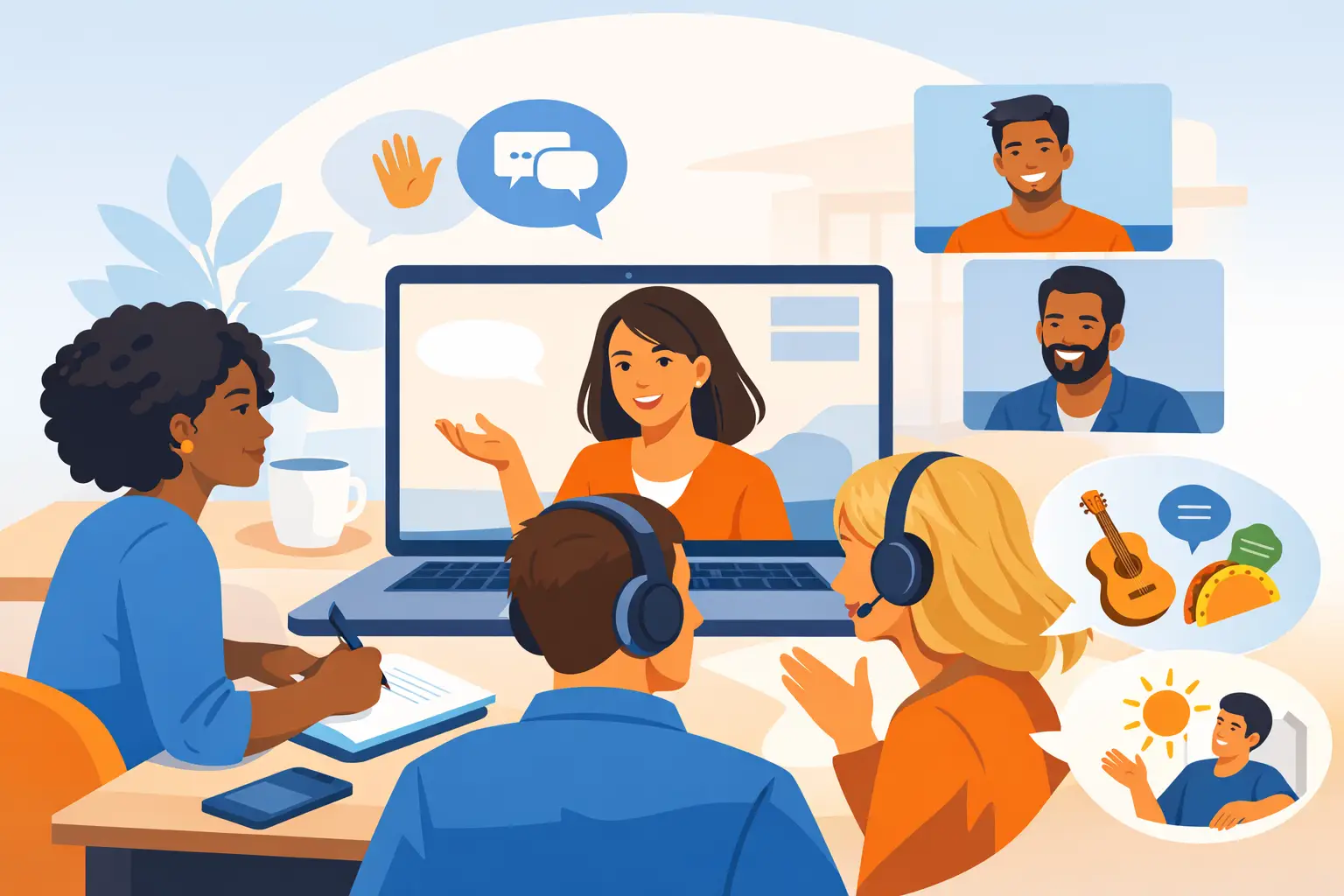


A client pauses on a video call and switches to Spanish. Your brain knows a few phrases, but can you ask the right follow-up question, clarify a deadline, or keep the conversation moving without freezing? That is where business Spanish classes online make a real difference. You do not need to sound like a textbook. You need to communicate clearly, respectfully, and confidently when the moment arrives.
For professionals in the US, Spanish is often part of the job before it becomes a formal job requirement. It shows up in customer conversations, supplier relationships, team meetings, site visits, travel, and the everyday small talk that builds trust. Learning business Spanish should prepare you for those moments, not leave you memorizing random vocabulary alone at midnight.
Why Business Spanish Is More Than Vocabulary
Knowing that factura means invoice or reunión means meeting is useful. But business communication is rarely a simple word-for-word exchange. You also need to understand tone, regional phrasing, how direct to be, and what people actually say in a fast conversation.
For example, a phrase that sounds perfectly polite in English can feel overly blunt when translated literally. A customer in Mexico, Colombia, or another Latin American country may use different expressions for the same task, timeline, or business relationship. Your goal is not to memorize every regional variation. It is to build the listening skills and flexibility to respond naturally.
That is why live instruction matters. A real teacher can hear your pronunciation, catch the sentence you almost said, and show you a better way to say it before it becomes a habit. They can also explain why one phrase works in a formal meeting while another fits better with a teammate you know well.
What Good Business Spanish Classes Online Should Teach
The best online classes are built around the situations you actually face. If you manage a team, your lessons should include giving instructions, checking understanding, offering feedback, and handling problems calmly. If you work in sales, you may need practice introducing your company, discussing pricing, answering objections, and building rapport.
A solid program does not treat every learner like they have the same destination. A beginner who needs to greet Spanish-speaking customers has different needs from an intermediate operations manager preparing for a trip to Latin America. Both deserve lessons that feel useful from the start.
Speaking Comes First
Many learners can recognize Spanish on a screen but struggle to produce it out loud. That gap can be frustrating, especially when your job puts you in front of people. Speaking practice helps close it because it requires you to make choices in real time.
In a live class, you can practice a meeting opener, a short update, or a polite request. Then you can do it again with a different response from your teacher. You learn how to recover when you miss a word, ask someone to repeat themselves, and keep going instead of giving up halfway through a sentence.
Those are professional communication skills, not just language skills.
Real Scenarios Beat Generic Dialogues
There is nothing wrong with learning core grammar. You need it. But grammar sticks better when it solves a problem you recognize. Rather than spending a full lesson on disconnected verb charts, you might use the past tense to explain what happened with an order, describe a customer issue, or recap a project update.
Useful scenarios can include introducing yourself and your role, scheduling a call, discussing availability, confirming next steps, navigating a negotiation, or making small talk before a meeting begins. The right mix depends on your role and current level.
A good teacher also brings in the conversational language that many courses skip. You may hear a colleague say ahorita, dale, or qué pena. These phrases can shift in meaning by country and context. Understanding them helps you sound less rehearsed and prevents awkward misunderstandings.
Cultural Context Builds Better Relationships
Business relationships are personal in many Spanish-speaking communities. A quick question about someone’s weekend, family, hometown, or trip is not wasted time. It can be part of how trust gets built before the agenda starts.
That does not mean every conversation follows the same rule. Industries, countries, generations, and individual personalities all matter. Still, cultural awareness gives you more options. You can read the room better, avoid assumptions, and communicate with genuine respect.
Online Classes Work Best When They Are Actually Live
Apps can be helpful for reviewing words during a coffee break. Short videos can reinforce a grammar point. But neither can listen to your answer in a high-stakes practice conversation and tell you why it did not land.
Business Spanish classes online are most valuable when they include real-time interaction with a teacher. You get immediate feedback, questions answered in plain English when needed, and a lesson that can pivot when your work situation changes. Got a presentation next week? Your class can focus on that. Need to prepare for a new client relationship? Bring the details and practice the language you will use.
This is also where private lessons have an edge. Group classes can be energizing and affordable, but they divide speaking time among several people. If your schedule is packed or your needs are specific, one-on-one instruction gives you more time to talk, make mistakes, and improve.
At AmigoProf, lessons are led by bilingual native Spanish speakers who understand both sides of the learning process. That matters when you need a teacher who can explain a tricky difference clearly, while still pushing you to speak more Spanish each session.
How to Choose the Right Level and Format
Do not wait until you feel “ready” to start. Beginners can begin with the essentials: introductions, polite questions, numbers, time, common workplace vocabulary, and simple ways to ask for help. The point is to start using Spanish early, even if your sentences are short.
If you already know some Spanish, avoid restarting from page one just because it feels safe. Ask for an assessment or trial conversation that identifies what you can do now. Maybe you understand plenty but need pronunciation work. Maybe you can chat comfortably but need help sounding more precise in a professional setting.
Your schedule matters too. Weekly video lessons work well for many people because they create accountability and leave room to review between sessions. Phone-based conversation practice can be a smart option when you want more speaking time without another hour in front of a screen. The best format is the one you can keep showing up for.
Make Progress Between Lessons Without Turning It Into Homework Hell
Your teacher-led sessions should do the heavy lifting, but small habits between classes help the language stay active. The key is keeping those habits connected to your real life.
Try changing one low-risk part of your workday. Write a few common customer greetings in Spanish. Practice saying your job title and a 30-second description of what your company does. Listen for Spanish in a meeting or at a job site, then bring phrases you heard to your next lesson.
You can also keep a simple running note of words and situations you wish you could handle better. Maybe you needed to explain a delay, ask someone to slow down, or respond to a compliment. Those are perfect lesson topics because they come from real pressure, not a made-up worksheet.
Do not chase perfection before you speak. Aim for clarity, curiosity, and a willingness to repair the conversation when needed. A simple ¿Puede repetirlo, por favor? can save you when the pace gets fast. So can Quiero asegurarme de que entendí bien, followed by your best summary of what you heard.
Confidence Is Built One Conversation at a Time
The biggest change usually is not that learners suddenly know every verb tense. It is that they stop panicking when Spanish enters the room. They can greet someone, ask a thoughtful question, understand more than they expected, and keep a conversation alive even when they need help.
That confidence comes from practice with a human who knows when to correct you, when to let you work through an answer, and when to challenge you a little more. Start with the conversation you need next, and let each class make the next one feel easier.