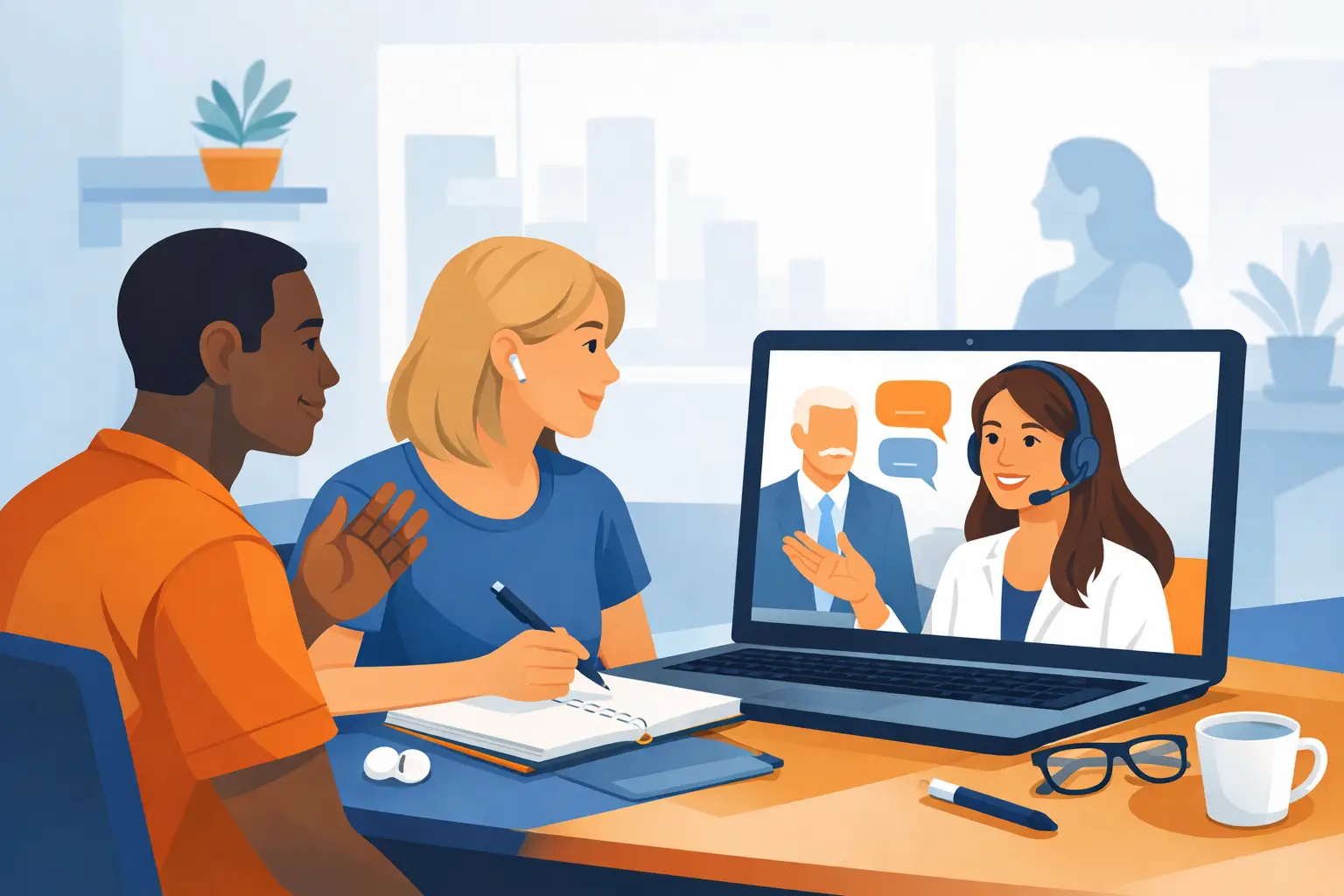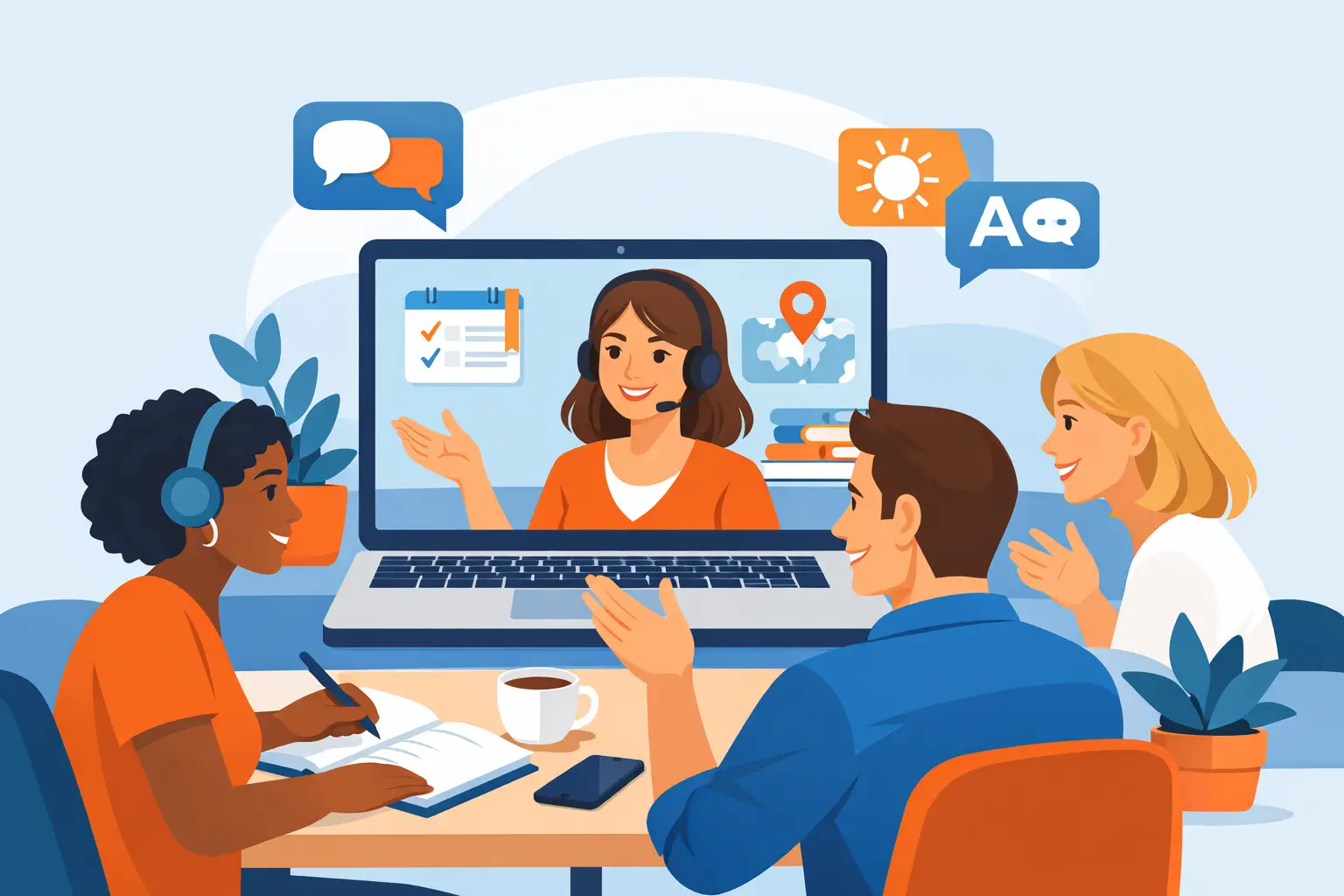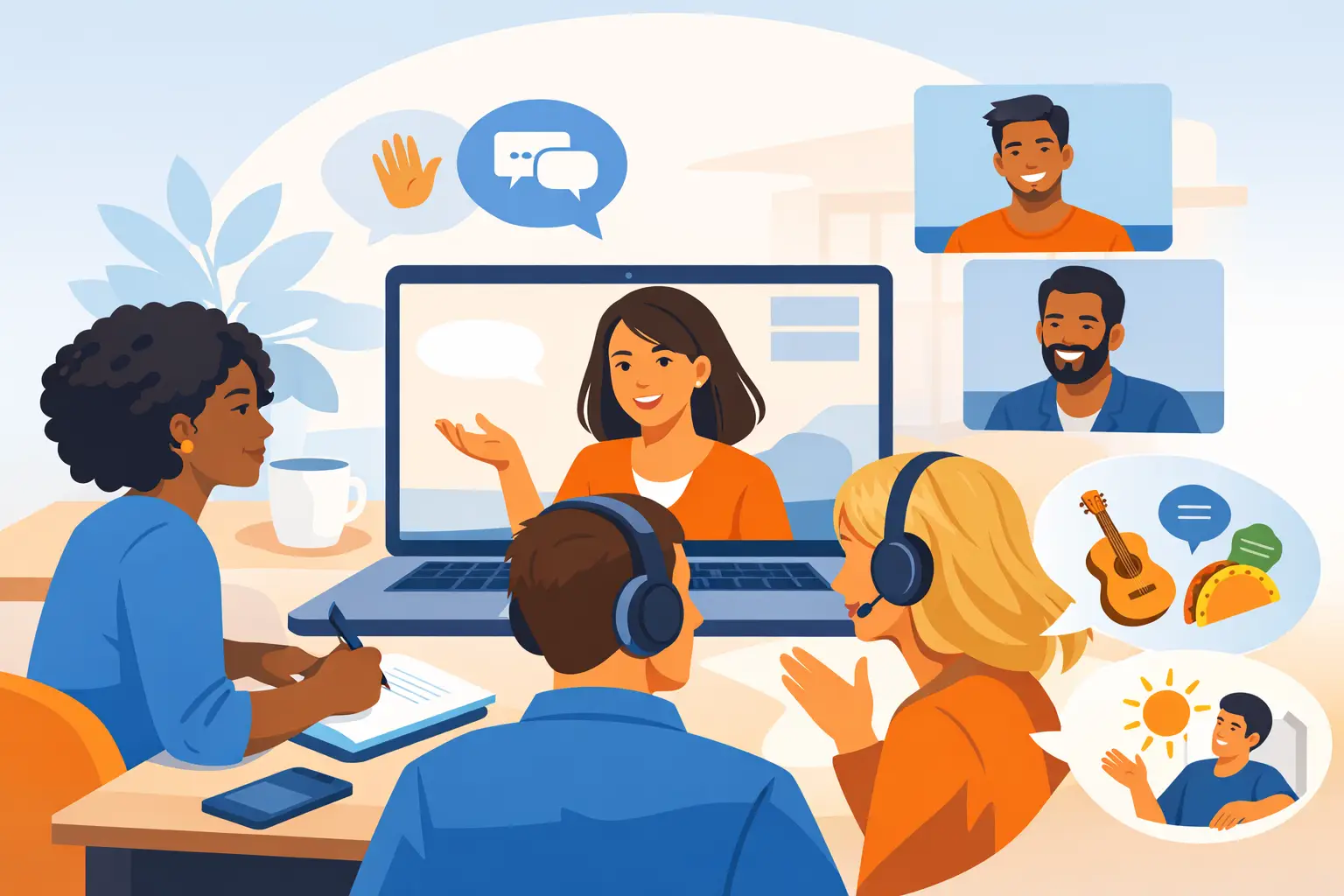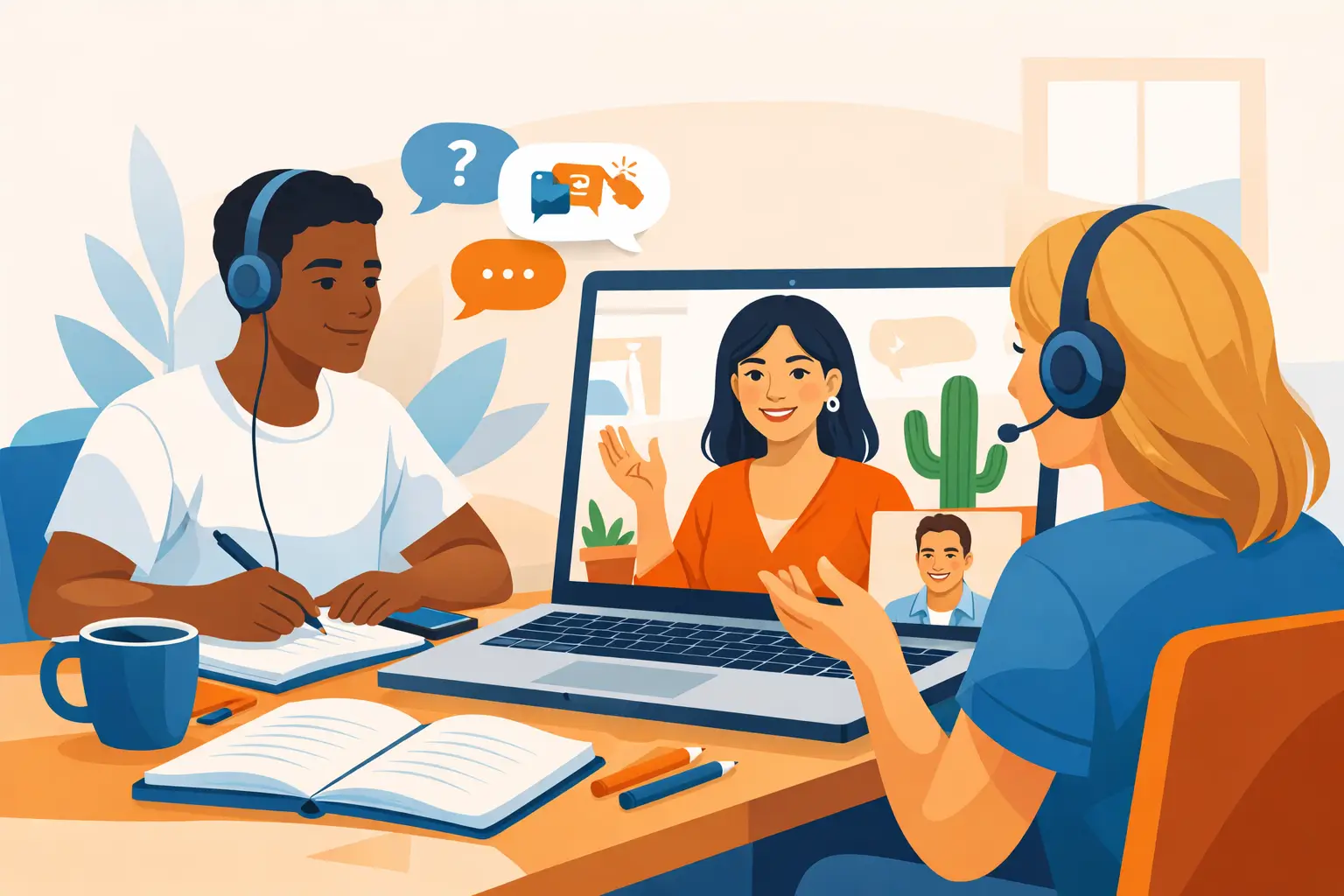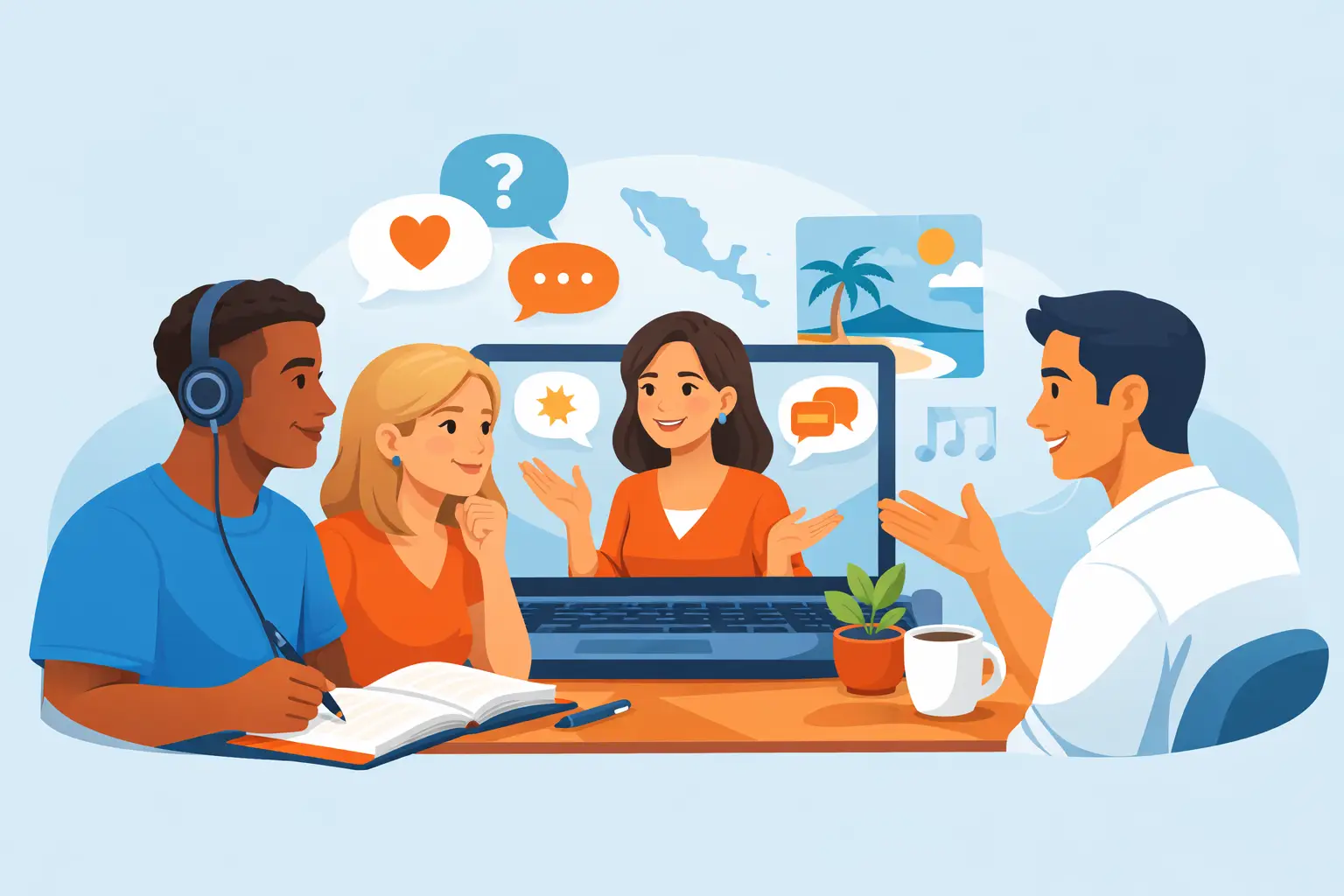


You can spend months tapping through an app, memorizing color words and random phrases, and still freeze the second a real person says, “Hola, ¿cómo estás?” That’s the gap a lot of learners run into. Online Spanish classes with live teacher support feel different because you’re not just collecting vocabulary – you’re actually learning how to respond, ask follow-up questions, fix mistakes, and keep a conversation moving.
If your goal is real Spanish for travel, work, family, dating, school, or everyday confidence, live instruction solves a problem that self-paced programs usually can’t. You need a person on the other side who can hear what you’re saying, catch what’s off, and help you sound more natural without making you feel awkward about it.
Why online Spanish classes with live teacher work better
The biggest difference is feedback in real time. A live teacher can hear your pronunciation, notice when you’re translating word-for-word from English, and stop bad habits before they stick. That matters more than most people realize.
Apps are fine for exposure. Flashcards can help you review. Recorded lessons can explain grammar. But none of those tools can react to you. They can’t tell when you understood the rule but still can’t use it in conversation. They can’t adjust when you’re stuck on past tense, nervous about speaking, or trying to prepare for a specific trip or job interview.
A real teacher can.
That human piece changes the pace of learning. Instead of following a generic path, you get lessons shaped around what you actually need. Maybe you want Mexican Spanish for travel. Maybe you need Latin American Spanish for customer calls, family conversations, or a relationship. Maybe you already know the basics but your listening is weak. Live classes make room for all of that.
What you actually get from a live teacher
A lot of people hear “live class” and assume it just means a Zoom call with a worksheet. Good online Spanish classes with live teacher support should go far beyond that.
First, you get correction while the moment is still fresh. If you say something unnatural, your teacher can fix it right there and explain why a native speaker would say it another way. That kind of correction sticks better than reviewing mistakes later.
Second, you get accountability. When there’s a real class on your calendar and a real person expecting you, it’s easier to stay consistent. Motivation comes and goes. Structure helps when life gets busy.
Third, you get conversation that sounds like real life. Not textbook dialogues about imaginary train stations. Real exchanges about your weekend, your job, your plans, your questions, your culture, and the people you actually want to talk to.
Finally, you get context. Spanish is not just grammar and vocabulary. It’s tone, rhythm, slang, regional habits, and social cues. A bilingual native teacher can explain why one phrase sounds friendly in one country and strange in another. That kind of insight is hard to get from automated platforms.
The best fit for people who are tired of passive learning
A lot of adult learners are not starting from zero. They’ve tried Duolingo, watched videos, maybe even took Spanish in school. The issue usually isn’t lack of effort. It’s lack of active speaking.
That’s why live instruction feels like a reset. You stop being a spectator and start participating.
This is especially useful if you understand more Spanish than you can speak. That gap is common. You hear words and recognize grammar, but when it’s your turn to answer, your mind goes blank. A live teacher helps close that gap by creating low-pressure practice where you can try, mess up, get corrected, and try again.
That cycle is where progress happens.
How to choose the right online Spanish classes with live teacher support
Not all live programs are equal, and this is where people sometimes waste money. A class being live doesn’t automatically make it good.
Look at whether the lessons are personalized or fixed. If every student gets the exact same script regardless of level or goals, the experience may still feel generic. Personalization matters because Spanish for a college exam is different from Spanish for moving abroad or speaking with your in-laws.
You’ll also want to look at the teacher profile. Native speakers matter, but teaching skill matters too. The strongest instructors know how to explain Spanish clearly to English speakers, not just speak it well themselves. That combination makes learning smoother, especially when grammar gets tricky.
Class format also matters. Private lessons usually move faster because every minute is about you. Group classes can be motivating and more affordable, but they may give you less speaking time. Neither option is automatically better. It depends on your budget, your schedule, and how much individual attention you need.
Then there’s the question of structure. Some learners want flexible conversation practice. Others need a clear path from beginner to advanced. The sweet spot is often a program that gives you both – a real curriculum and room to adapt lessons around your goals.
Who benefits most from live online Spanish classes
Beginners usually benefit because they build good habits early. Instead of guessing pronunciation or memorizing stiff phrases, they start with real guidance and clearer speaking patterns.
Intermediate learners benefit because this is often where progress stalls. You know enough to get by, but not enough to express yourself comfortably. A live teacher helps push you past survival Spanish into actual fluency.
Advanced learners benefit too, especially if they want better nuance. Maybe your grammar is strong, but you still sound overly formal, miss slang, or struggle with speed and cultural references. A human teacher can help you smooth that out in a way software really can’t.
And if you’re learning for a specific reason, live classes are even more valuable. Preparing for business conversations, travel, certification, family communication, or dating in Spanish all require different vocabulary, different situations, and different levels of formality.
Why Latin American Spanish matters for many US learners
For a lot of people in the US, Latin American Spanish is the most practical choice. It’s what you’re likely to hear in your community, at work, while traveling, and in everyday relationships.
That doesn’t mean there’s only one version of it. Spanish varies across countries, and that’s exactly why live teachers are helpful. They can teach standard, clear Spanish while also showing you regional vocabulary and pronunciation differences that come up in real conversations.
This is where a school like AmigoProf stands out. The focus is not on robotic memorization or boring computer drills. It’s on learning with real teachers who can help you speak naturally, understand modern usage, and build confidence in the kind of Spanish people actually use.
What progress really looks like
One of the best things about live learning is that progress becomes easier to notice. It’s not just a streak counter or a completed lesson badge. It’s the moment you answer without translating first. It’s when you understand a joke, handle a phone call, ask a follow-up question, or recover after making a mistake instead of shutting down.
That kind of progress can feel messy from week to week. Some classes will feel easy. Others will expose exactly what you still need to work on. That’s normal. In fact, it’s usually a good sign that the lessons are challenging you in the right way.
The goal is not to sound perfect overnight. The goal is to become more comfortable, more accurate, and more expressive over time.
Are live classes worth the cost?
Usually, yes – if you actually use them.
Live classes cost more than an app, but they also tend to produce faster, more practical results because they cut down on wasted time. You’re not spending months guessing what to study next or repeating exercises that don’t address your weak spots.
That said, the best option depends on your habits. If you want the cheapest possible tool and you know you won’t commit to regular lessons, an app may be enough for light exposure. But if you’re serious about speaking and want consistent progress, live instruction is often the better value.
You’re paying for personalization, correction, accountability, and real communication practice. For most learners, that’s the part they were missing all along.
The real question to ask before you enroll
Don’t ask whether a program has flashy features. Ask whether it gets you speaking more, sooner, with real feedback from someone who knows how to help.
That’s what moves Spanish from “something I’m studying” to “something I can actually use.” And once that starts happening, learning feels a lot less frustrating and a lot more like joining a conversation you were meant to be part of.