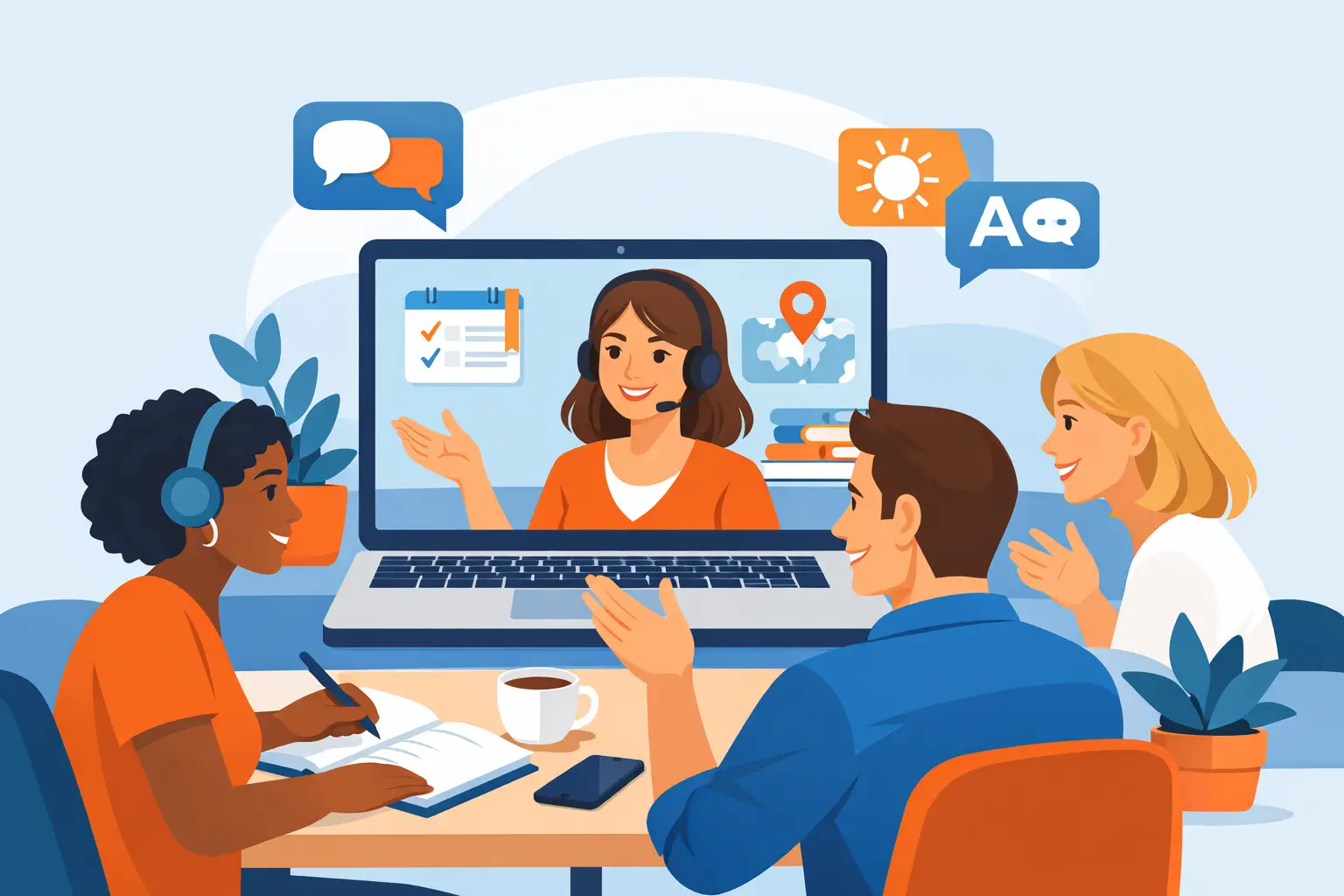

You can keep a 200-day app streak and still freeze when someone asks, “¿Qué hiciste el fin de semana?” That is the real question behind Spanish tutor vs app: not which option gives you more exercises, but which one helps you actually respond when Spanish is happening in front of you.
Apps can be useful. A great tutor can be transformative. The better choice depends on what you need Spanish to do for you: order food without pointing at a menu, talk with your partner’s family, contribute in a meeting, travel through Latin America, or stop translating every thought in your head before you speak.
Spanish Tutor vs App: The Biggest Difference
A language app is built to work for millions of people at once. That makes it convenient, affordable, and easy to open while you are waiting for coffee. But it also means the experience is usually standardized. You answer prompts, repeat set phrases, match words, and move through a preset path.
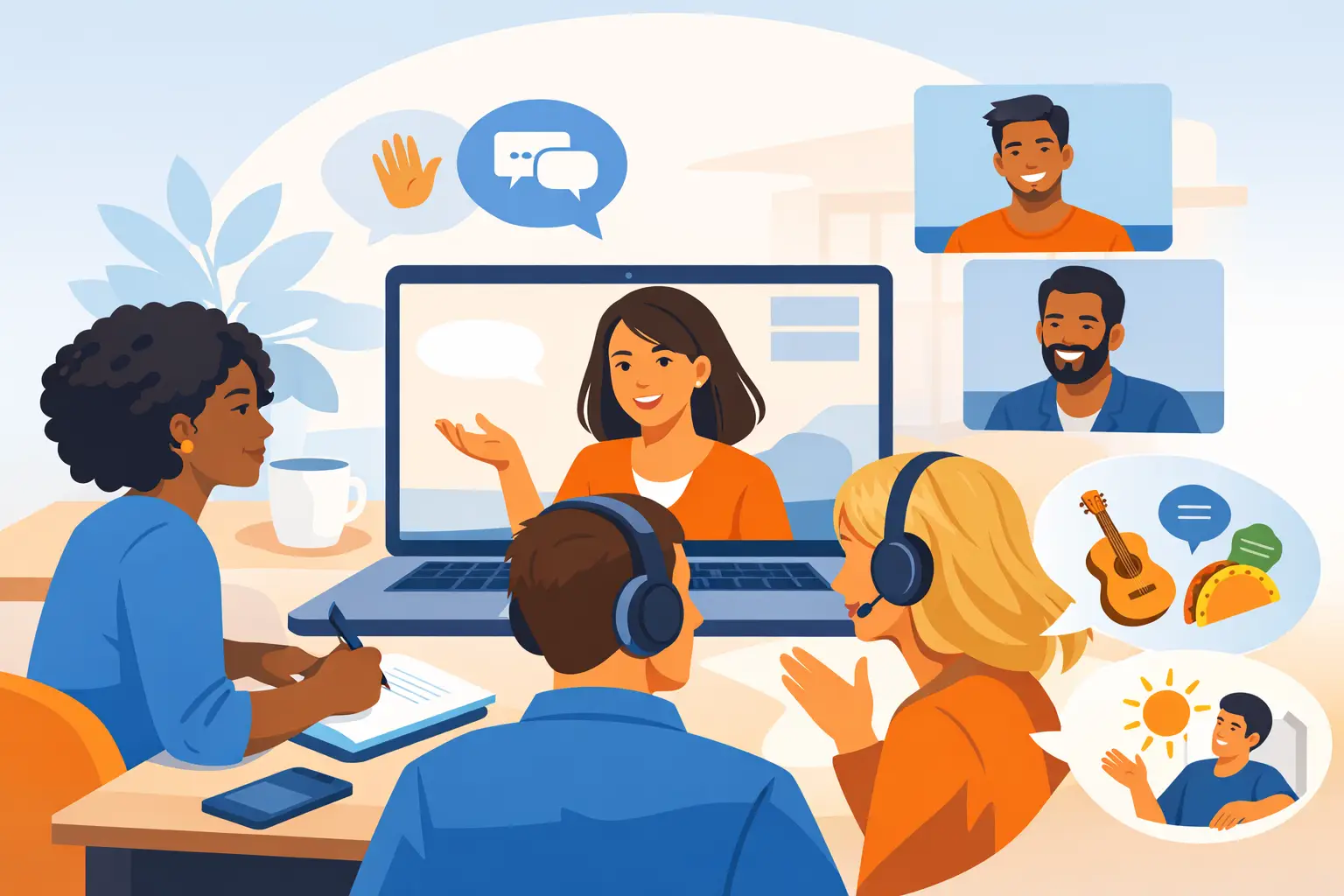
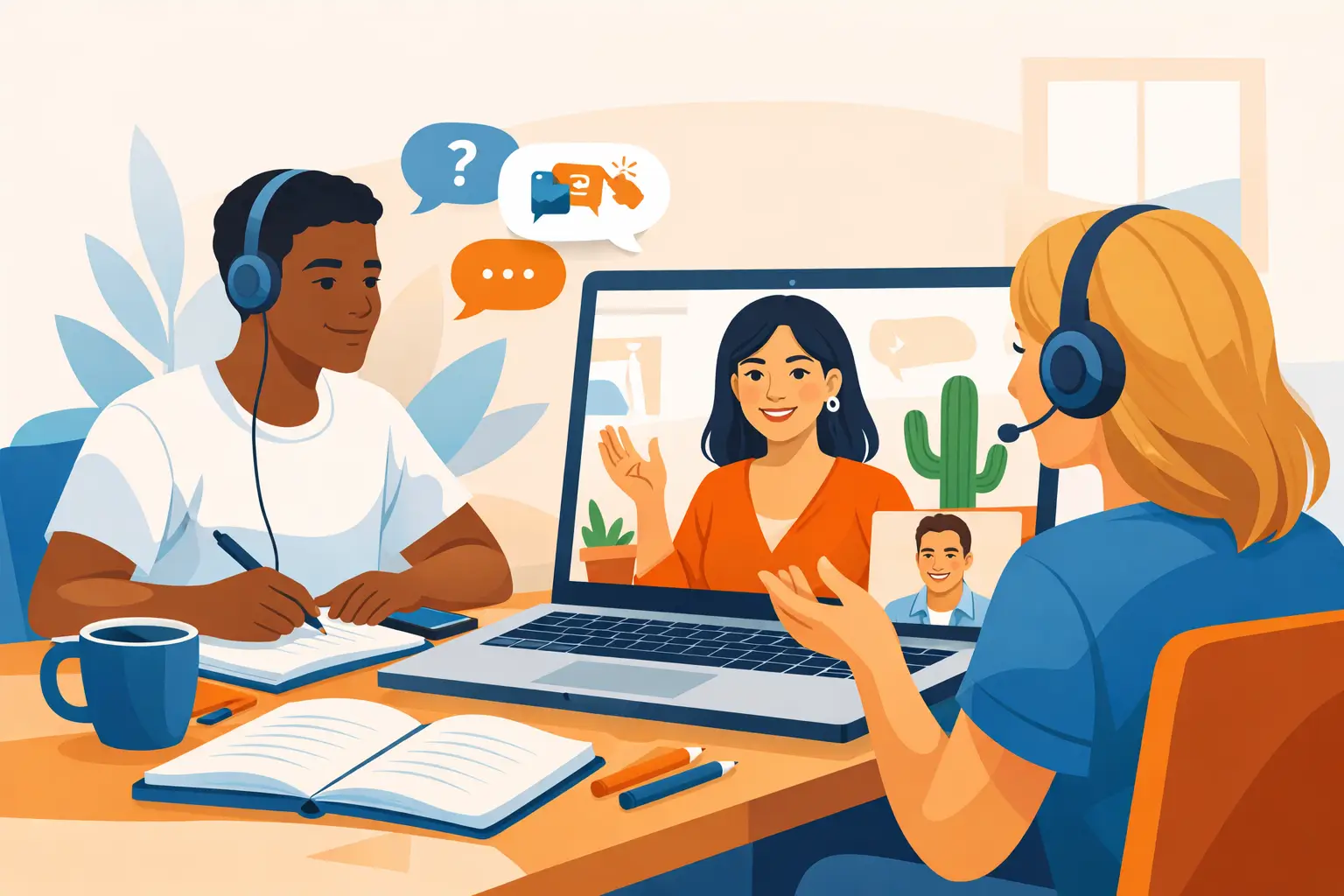
A Spanish tutor works from the person in front of them: you. A real teacher notices whether you hesitate with past tense, confuse ser and estar, understand grammar but avoid speaking, or sound too formal for the situation. Then they adjust the lesson while you are there.
That human adjustment matters because Spanish is not just a collection of correct answers. It is a living conversation. The right phrase changes based on your relationship with the person, the country, the tone, and the moment.
If you are learning Spanish for a specific reason, personalized instruction can save a lot of time. A traveler may need hotel questions and polite small talk. A healthcare worker may need to understand patients clearly. Someone dating into a Spanish-speaking family may need natural, warm conversation, not textbook dialogues about a fictional school schedule.
What Apps Do Well
Let’s give apps credit. They can be a smart part of a learning routine, especially for beginners or busy people who need a low-pressure way to build a daily habit.
Apps are particularly good for exposure. They can help you pick up basic vocabulary, recognize common phrases, review verb forms, and get familiar with how Spanish looks and sounds. If you have ten minutes between meetings, an app is easier to use than scheduling a full class.
They also make mistakes feel private. For someone who feels nervous about speaking, tapping through a few lessons can be a comfortable first step. You can repeat a phrase ten times without worrying that anyone is waiting for you.
The downside is that convenience can look like progress. Choosing the right word from four options is not the same as producing that word naturally in a conversation. Repeating a sentence after a recording is not the same as understanding a fast-speaking native speaker who changes the subject halfway through a story.
Apps are great as a supplement. They are less reliable as your only plan if your goal is confident, spontaneous speaking.
What a Spanish Tutor Gives You That an App Cannot
The biggest advantage of live instruction is immediate, personal feedback. When you say, “Yo fui al tienda,” a tutor can correct you gently, explain why it is “a la tienda,” and have you use the phrase again in a different sentence. More importantly, they can notice whether you understand the correction or are simply repeating it.
A teacher also hears the mistakes that written exercises miss. Maybe you know the word pero but pronounce it so it sounds unclear. Maybe your rhythm is choppy because you pause after every word. Maybe you are using a technically correct phrase that native speakers rarely say in everyday Latin American Spanish.
That is where a bilingual native speaker becomes more than a grammar checker. They can explain the difference between what is correct, what sounds natural, and what may sound strange in a real conversation. They can teach you how people actually greet each other, soften a request, react with surprise, tell a story, or disagree without sounding rude.
Most of all, a tutor makes you participate. You cannot quietly guess your way through a live conversation. At first, that can feel uncomfortable. Then it becomes the exact practice that builds confidence.
Live practice creates useful pressure
Real conversations do not wait for you to rearrange a sentence three times. Practicing with a supportive teacher gives you a safe place to work through that pressure. You learn how to ask someone to repeat themselves, buy yourself a few seconds to think, and keep going when you do not know every word.
Those are not small skills. They are the skills that get you through a restaurant order, a family gathering, a client call, or a cab ride in Mexico City, Bogotá, or Buenos Aires.
Cost: Look Beyond the Monthly Price
Apps usually win on sticker price. Many offer free content or inexpensive monthly subscriptions. If your budget is extremely tight, that accessibility is valuable, and there is no reason not to use one.
But cost is not only about what you pay each month. It is also about how long you spend stuck. If you have been using an app for a year but still avoid a basic conversation, the low monthly fee may not be giving you the result you wanted.
A tutor costs more because you are paying for a real person’s attention, preparation, experience, and feedback. For learners with a deadline or a clear goal, that can be a better value. Maybe you are visiting your in-laws in three months, preparing for a job opportunity, or relocating. In those cases, focused lessons can help you spend your study time on what matters now.
There is also a middle ground. Use an app to review vocabulary between classes, then use your tutoring time to speak, ask questions, and correct patterns. You do not have to choose one forever.
Motivation Is Personal
Some people love streaks, badges, and daily reminders. If that sounds like you, an app may help you stay consistent. The problem comes when the game becomes the goal. A perfect streak does not guarantee that you can hold a conversation.
Other learners need accountability. They show up because a teacher is expecting them, and once the lesson starts, they are glad they did. A tutor can also keep your momentum going when Spanish gets messy, which it will. You may feel like you are getting worse just as you start noticing more of what you do not know. That is normal growth, not failure.
A good teacher helps you see the progress you miss: the question you answered without translating, the joke you understood, the longer story you were able to tell, or the moment you corrected yourself before anyone had to step in.
Choose Based on Your Goal, Not the Hype
An app may be enough if you are casually exploring Spanish, want a short daily vocabulary habit, or need something to use on your commute. It is also a helpful companion if you are already taking lessons and want extra repetition.
A tutor is usually the stronger choice if speaking is your priority. That includes travel, work, relationships, school, moving abroad, and any situation where you will need to understand real people and answer in real time. It is especially helpful if you have tried apps before and feel like you know plenty of words but cannot put them together when it counts.
For Latin American Spanish, look for a teacher who can teach more than neutral, generic phrases. You want someone who can help you understand pronunciation, regional vocabulary, common slang, and cultural context without making the lesson feel like a lecture. The goal is not to memorize every variation across 20 countries. It is to become flexible, respectful, and comfortable communicating.
At AmigoProf, that is why lessons are built around live conversation and your actual reason for learning. You can work through a structured path from the basics to advanced Spanish, focus on a specific goal, or build speaking confidence through real-time phone practice. You are not left alone with a screen hoping the next level will make you fluent.
The Best Answer Might Be Both
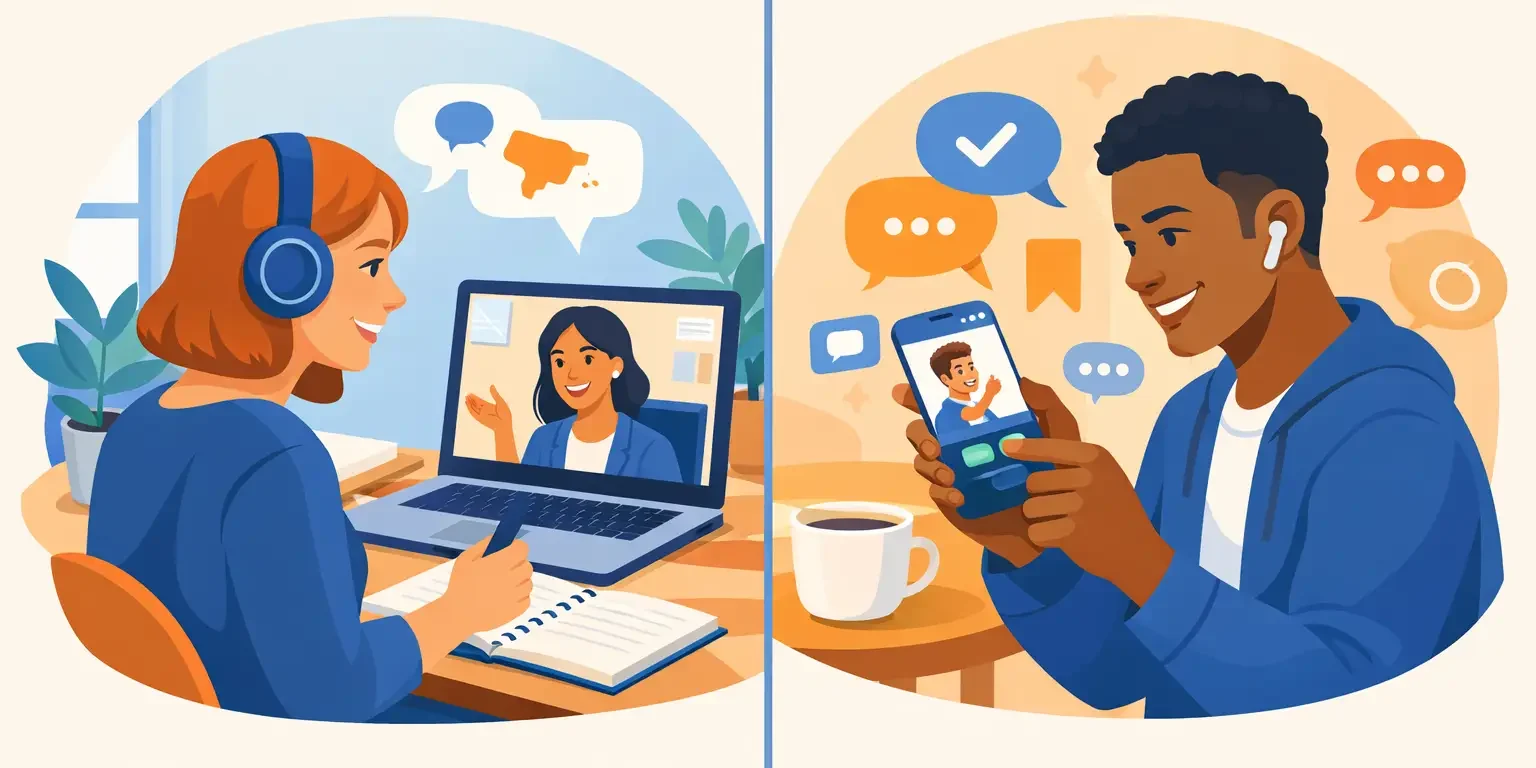
The smartest routine for many learners is simple: use an app for quick review and a tutor for the parts that require a human being. Review words while standing in line. Practice verb forms during a lunch break. Then bring your questions, weak spots, and real-life goals to a live lesson.
Think of the app as flashcards with a personality. Think of the tutor as your coach, conversation partner, and guide when Spanish stops behaving like a worksheet.
Do not wait until you feel “ready” to speak. Speaking is not the prize you get after learning Spanish. It is how Spanish starts becoming yours.