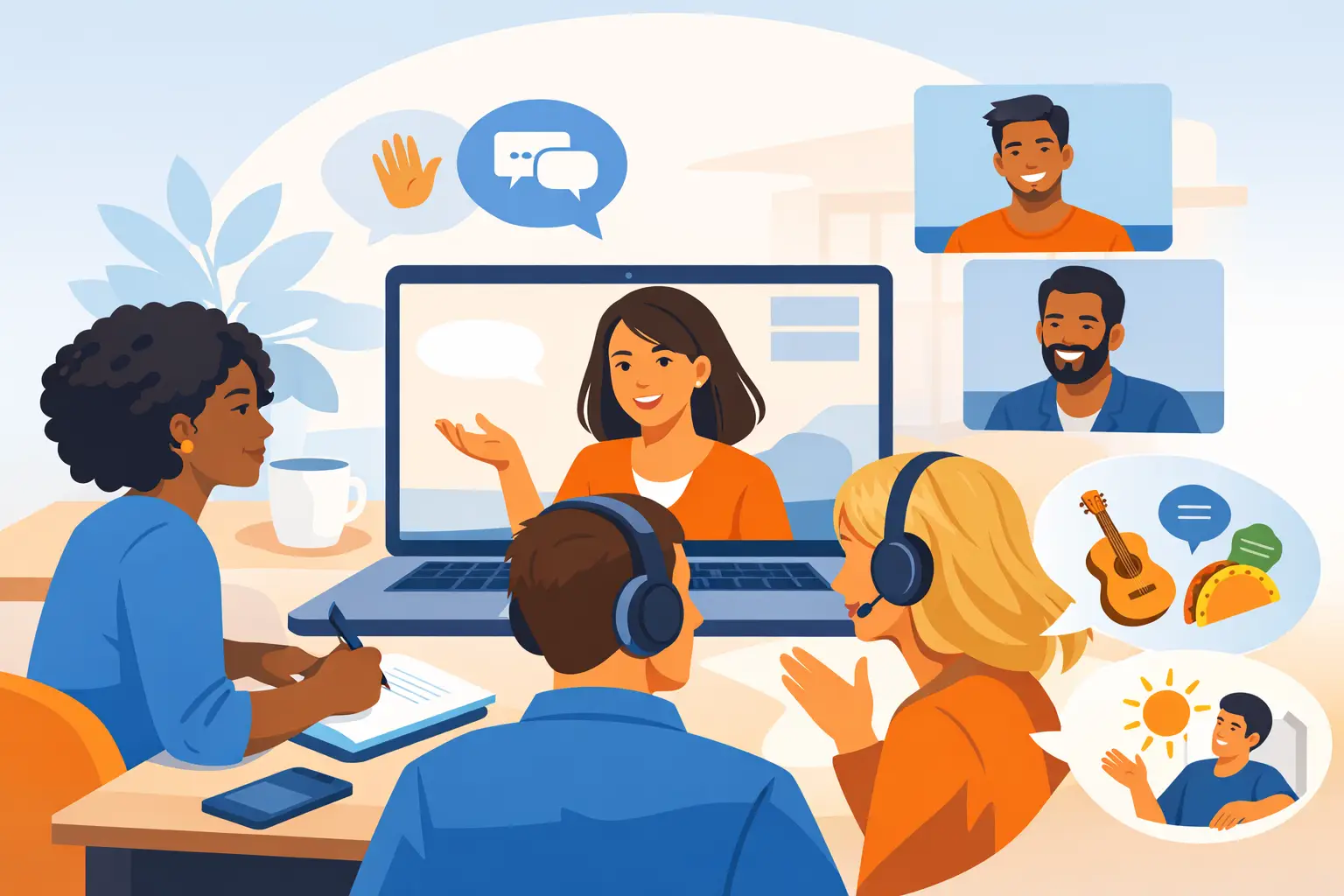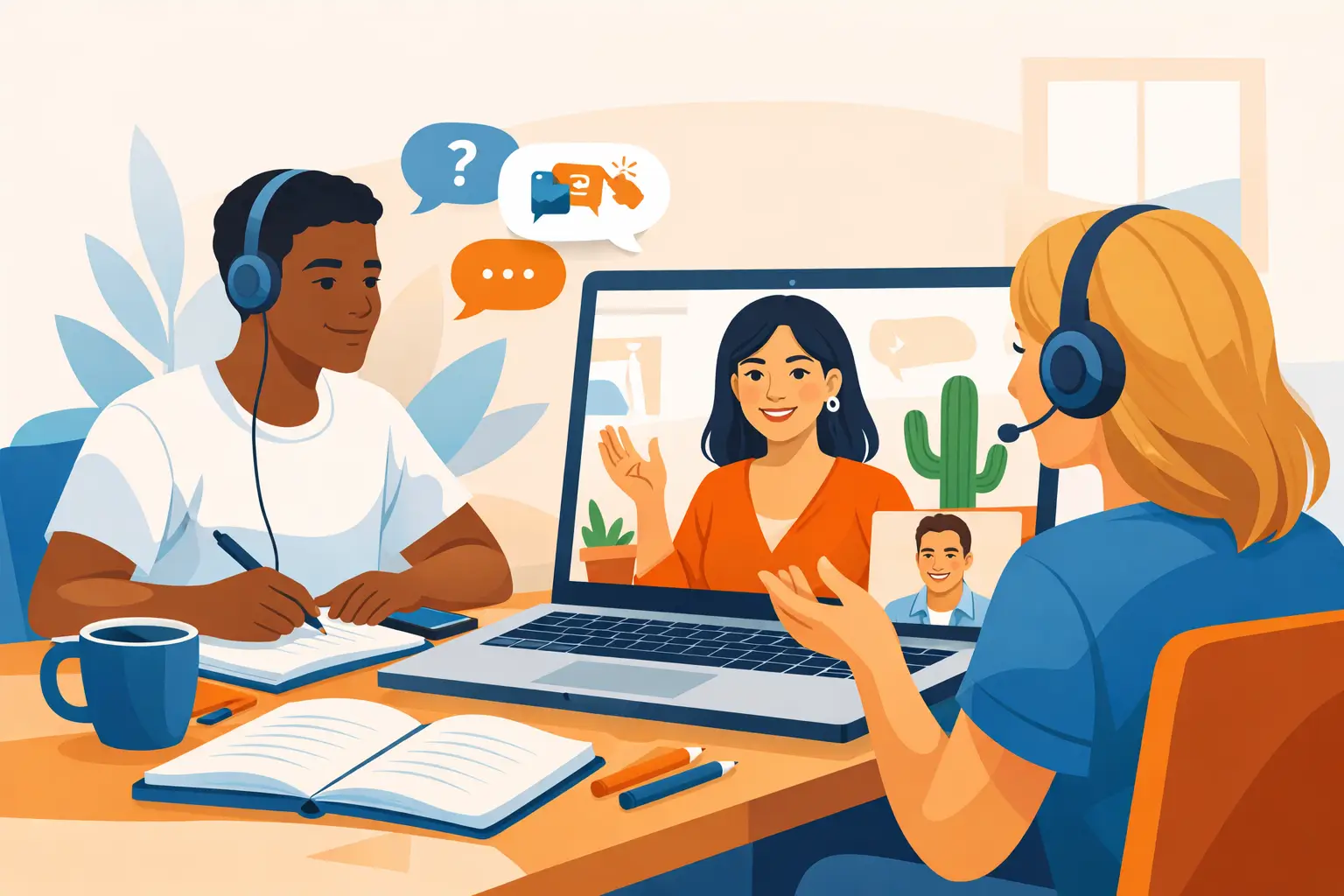


The first time you need to order lunch, explain a work problem, or meet your partner’s family in Spanish, an app streak will not answer back. Spanish conversation practice with native speakers does. It gives you the one thing flashcards, grammar charts, and prerecorded videos cannot: a real person who responds to what you actually say.
That can feel intimidating at first. It is also where real progress begins. Speaking with a native Spanish speaker helps you move beyond translating every sentence in your head and start communicating with more confidence, personality, and ease.
Why Spanish Conversation Practice With Native Speakers Works
A live conversation forces you to make choices in the moment. You listen for meaning, find the words you know, ask for clarification, and react naturally. Those are the same skills you need when you are traveling in Mexico, talking with a Spanish-speaking client, or catching up with friends from Colombia.
Native speakers also give you feedback that feels connected to real life. A textbook might teach one perfectly correct phrase, but a teacher can tell you whether people actually say it in Peru, whether it sounds too formal for a group chat, or how to make it warmer and more natural. That is especially valuable for learners focused on Latin American Spanish, where vocabulary, rhythm, and everyday expressions can change from country to country.
The goal is not to sound like someone else. It is to express yourself clearly, understand the people around you, and feel comfortable being part of the conversation.
What a Good Practice Conversation Should Include
Not every chat creates the same results. Casual speaking time is useful, but you will improve faster when your conversation partner knows how to guide you without taking over. A strong session has room for real talk and a little structure.
Conversation you would actually have
If your goal is travel, practice asking for directions, handling a restaurant mix-up, talking to a driver, and making friendly small talk. If you use Spanish at work, rehearse introductions, meetings, customer questions, or a presentation you are nervous about. If you are learning for family or a relationship, talk about the stories, traditions, and everyday moments that matter to you.
This makes vocabulary stick because it belongs to a situation you can picture. Memorizing a list of food words is fine. Explaining that you have a dairy allergy while ordering at a busy restaurant is better practice.
Feedback that does not stop the flow
Constant corrections can make anyone freeze up. No corrections at all can leave you repeating the same mistakes for months. The sweet spot depends on your level and your goal.
Beginners often need gentle corrections in the moment, especially for pronunciation or a sentence that changes the meaning. Intermediate and advanced speakers may benefit from talking freely first, then reviewing recurring patterns at the end. A good native-speaking teacher listens for what will make the biggest difference rather than correcting every tiny detail.
Cultural context, not just translations
Language is social. The words you choose can sound friendly, distant, overly direct, funny, or confusing depending on where and how you use them. A native speaker can help you understand the difference between a phrase that is technically right and one that fits the moment.
For example, there are many ways to say “What’s up?” in Spanish, and the best choice depends on the country, relationship, and setting. These details are not extras. They are part of sounding comfortable and understanding the response you get back.
How to Get More From Every Speaking Session
You do not need to arrive with perfect grammar or a long list of prepared questions. You do need a simple purpose. Before your session, choose one situation you want to handle better and one thing you want feedback on. Maybe you want to stop mixing up past tenses, improve your pronunciation of the rolled r, or tell a story about your weekend without switching to English.
Start each conversation by saying what you need. Try: “Today I want to practice talking about my job,” or “Please correct me when I use the wrong past tense.” This gives your teacher a clear way to personalize the session.
During the conversation, resist the urge to build a perfect sentence before speaking. Use the Spanish you have. If you get stuck, ask for help in Spanish: “¿Cómo se dice…?” or “¿Puedes repetir eso, por favor?” Those little recovery skills are incredibly useful outside the classroom too.
Afterward, write down a handful of phrases you wanted but did not have, plus corrections that came up more than once. Then use them again within a day or two. The point is not to create a giant notebook you never open. It is to turn useful feedback into language that comes out faster next time.
The Right Level of Challenge
Speaking practice should stretch you, not make you feel lost for an hour. If every sentence is exhausting, ask your teacher to slow down, use more familiar topics, or give you a few key phrases before the conversation starts. There is no prize for pretending you understand everything.
On the other hand, if every session stays safely inside basic introductions and weather talk, you may not be pushing forward. Ask for follow-up questions. Practice giving opinions, telling stories, disagreeing politely, or explaining why you made a decision. Those are the moments when your Spanish becomes flexible.
Beginners can absolutely speak with native speakers. The format simply needs to match the level. Short guided conversations, visuals, repetition, and patient support work far better than being thrown into rapid-fire slang on day one. More advanced learners need a different kind of challenge: faster exchanges, regional expressions, complex topics, and feedback on nuance.
Why Live Teachers Beat Passive Practice Alone
Apps can be handy for a quick review while you wait in line. Podcasts can sharpen your ear. Neither can notice that you understood the words but missed the speaker’s meaning, or help you rephrase an awkward sentence into something you would naturally say.
Live instruction is responsive. If you are planning a trip next month, your lessons can focus on travel right now. If you have an interview with a bilingual employer, you can practice it out loud before the real thing. If you keep getting nervous when someone speaks quickly, your teacher can adjust the pace and help you build up gradually.
That human support matters when motivation dips, too. Language learning is not a straight line. Some weeks, you feel like you can talk about anything. Other weeks, a simple verb disappears from your brain. A real teacher can spot progress you may not notice and keep your plan moving forward.
At AmigoProf, this is the difference: you are not left alone with a screen hoping the next exercise will make you conversational. You practice with bilingual native Spanish speakers who can teach, encourage, correct, and adapt to the reason you are learning in the first place.
Make Speaking a Habit, Not a Test
One long conversation once a month can be fun, but regular practice wins. Two or three shorter sessions each week usually help more because your brain has repeated chances to retrieve words and notice patterns. Even 15 focused minutes can count when you speak actively.
Try to connect sessions to your real routine. Talk through your commute, describe what happened at work, plan your weekend, or discuss a show you watched. The more Spanish is connected to your life, the less it feels like a subject you only visit during study time.
You will make mistakes. You may blank on an easy word, use the wrong gender, or accidentally choose a phrase that gets a laugh. Good. Those are not signs that you are failing. They are signs that you are doing the hard, useful work of communicating with another person.
The next conversation does not require you to be ready. It is what helps you become ready. Show up, say what you can, ask questions when you need to, and let a real person help you turn Spanish from something you study into something you live.