
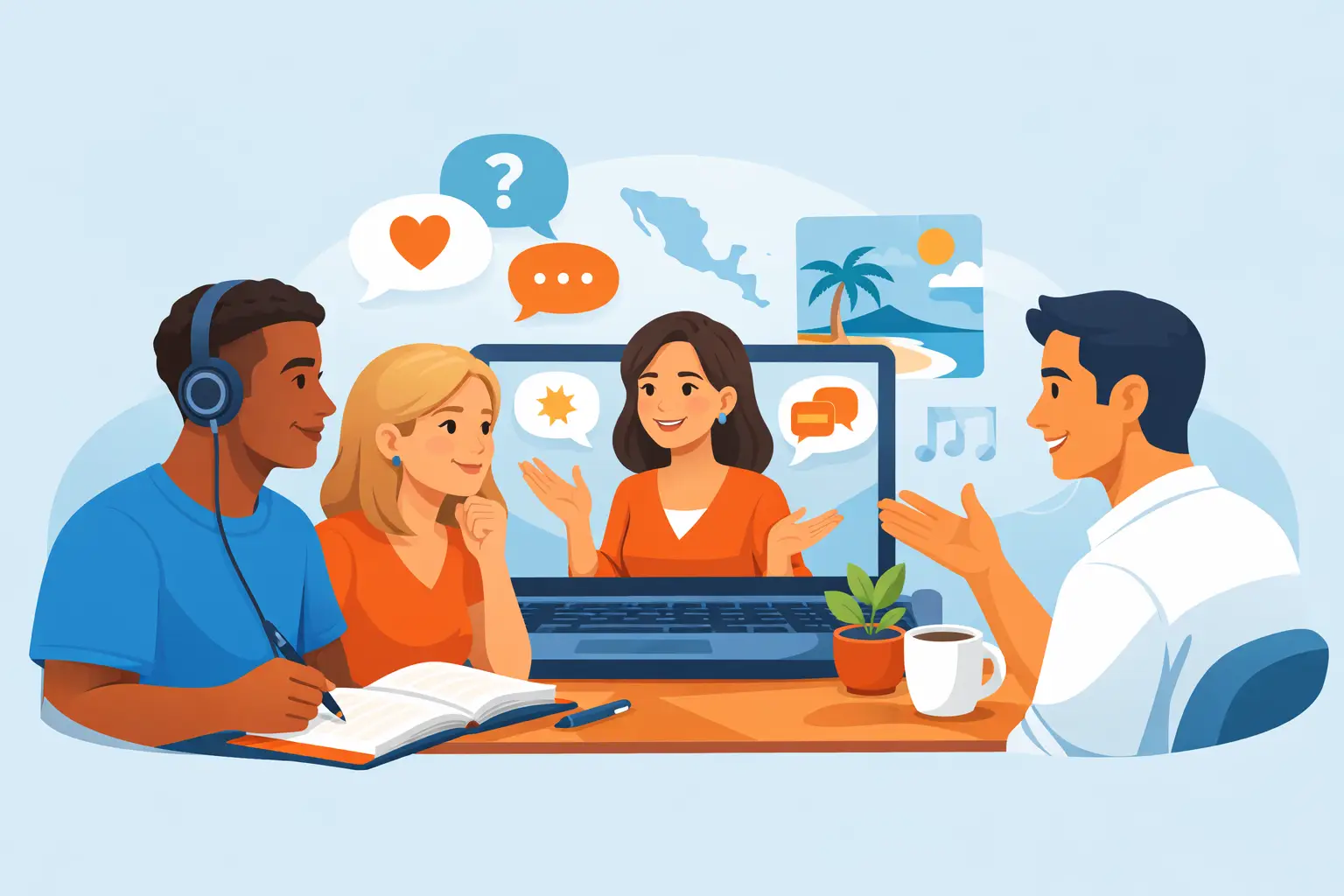
Your phone rings. It is your partner’s mom, a client in Mexico City, or the hotel desk in Bogotá. You understand the first few words, panic a little, and suddenly every Spanish phrase you have ever studied disappears. That moment is why people ask, can adults become fluent Spanish speakers? Not because they want to pass a quiz, but because they want to participate without freezing.
Yes, adults can become fluent in Spanish. They may not learn exactly like children do, and they do not need to. Adults bring motivation, life experience, pattern recognition, and a clear reason for learning. The real challenge is choosing a method that gets you talking regularly instead of collecting vocabulary you never use.
Can adults become fluent Spanish speakers after 30, 40, or 60?
Absolutely. Age can affect how quickly you pick up a new accent or memorize a long list of words, but it does not put a ceiling on meaningful fluency. Plenty of adults learn to manage relationships, travel independently, work with Spanish-speaking colleagues, and carry relaxed everyday conversations later in life.
The biggest difference is usually not age. It is exposure and consistency. Children often get thousands of hours surrounded by a language, with no embarrassment about making mistakes. Adults can create a version of that environment on purpose: regular conversations, useful listening, feedback from a real person, and Spanish connected to their actual life.
There is also a helpful adult advantage: you can decide what fluency means for you. A nurse may need to explain symptoms and give reassurance. A traveler may want to order food, ask follow-up questions, and make friends. Someone with Spanish-speaking in-laws may care most about family stories, jokes, and warm conversation. That focus makes progress faster because you are not trying to learn every possible word at once.
What fluency really looks like
Fluency does not mean never forgetting a word or sounding exactly like a native speaker from one particular country. Spanish is spoken across many countries, regions, and communities. A natural conversation in Miami may include different expressions than one in Medellín, Buenos Aires, or Guadalajara.
For most adult learners, fluency means you can understand the main point of normal speech, express your ideas without translating every sentence in your head, ask for clarification when needed, and keep a conversation moving even when your grammar is not perfect. You can tell a story, solve a problem, react naturally, and be understood.
That last part matters. You do not need to wait until you know every verb tense before speaking. In fact, waiting is one of the fastest ways to stay stuck. Real fluency grows through imperfect conversations. You say something a little awkwardly, get a better way to say it, and use it again the next day.
Why apps alone rarely get adults to speaking fluency
Apps can be useful for quick review. They can help you remember a few words while waiting in line or reinforce a grammar point you already understand. But tapping answers on a screen is not the same as responding when a real person changes the subject, speaks faster than expected, or uses a regional phrase you have never heard.
Speaking is a live skill. You need practice hearing Spanish as it is actually spoken, organizing your thoughts under a little pressure, and recovering when you do not understand. That is hard to simulate with multiple-choice exercises and streaks.
A human teacher also notices the things an app cannot reliably catch: the English sound hiding in your pronunciation of pero, the word order that makes your message unclear, or the fact that you know the past tense but avoid using it in conversation. Good feedback is specific, encouraging, and immediate. It turns mistakes into momentum instead of something to feel embarrassed about.
The habits that move you toward fluency
Adult learners do not need a six-hour daily study routine. They need a routine they can keep when work gets busy, travel happens, or life is messy. Aim for frequent contact with Spanish, with speaking at the center rather than saved as a reward for later.
Start by building a small, practical base. Learn greetings, question words, high-frequency verbs, time phrases, and vocabulary tied to your daily routines. Then use those pieces out loud. Describe your morning. Explain what happened at work. Talk about what you are making for dinner. These may sound simple, but they build the automatic language that supports longer conversations.
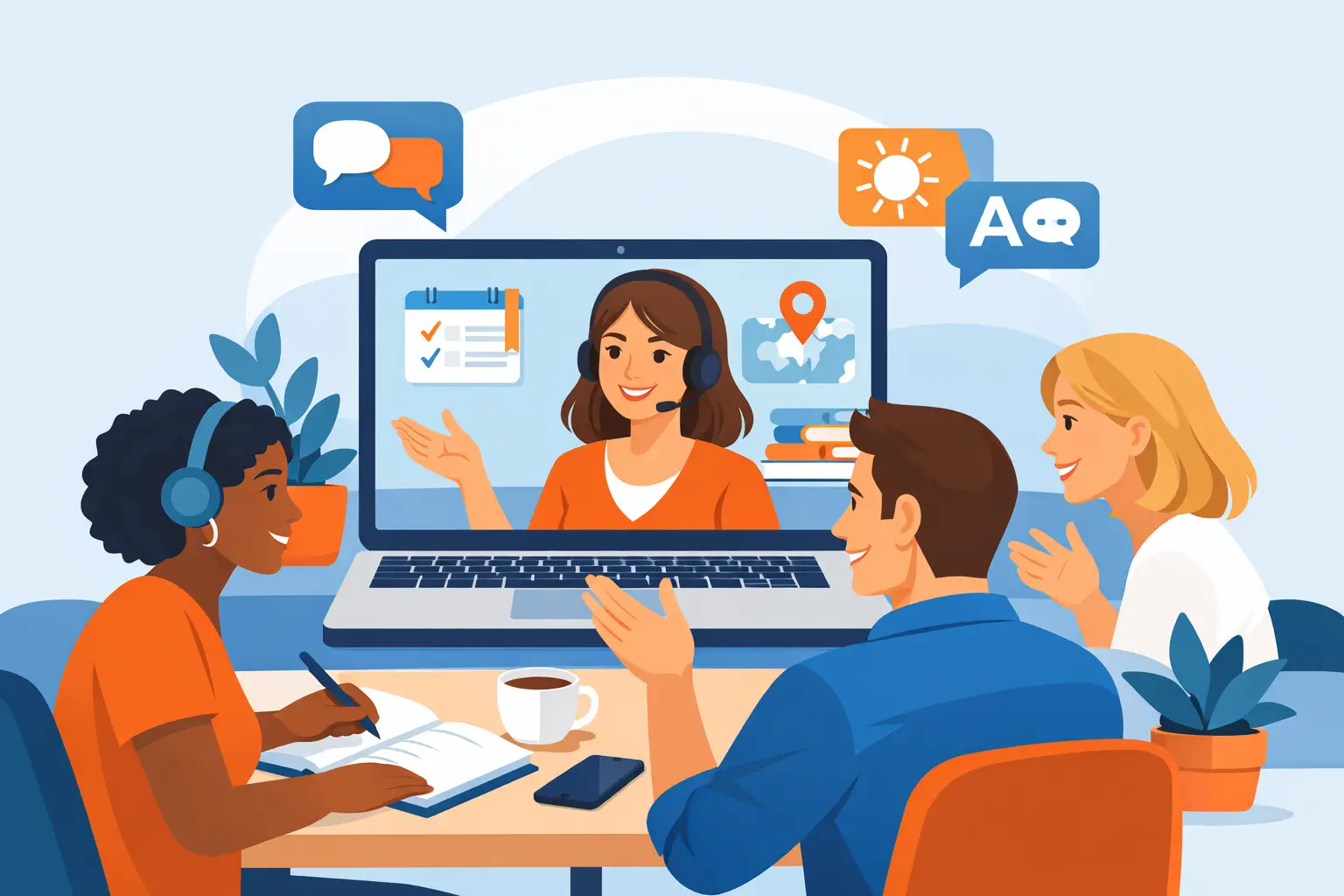
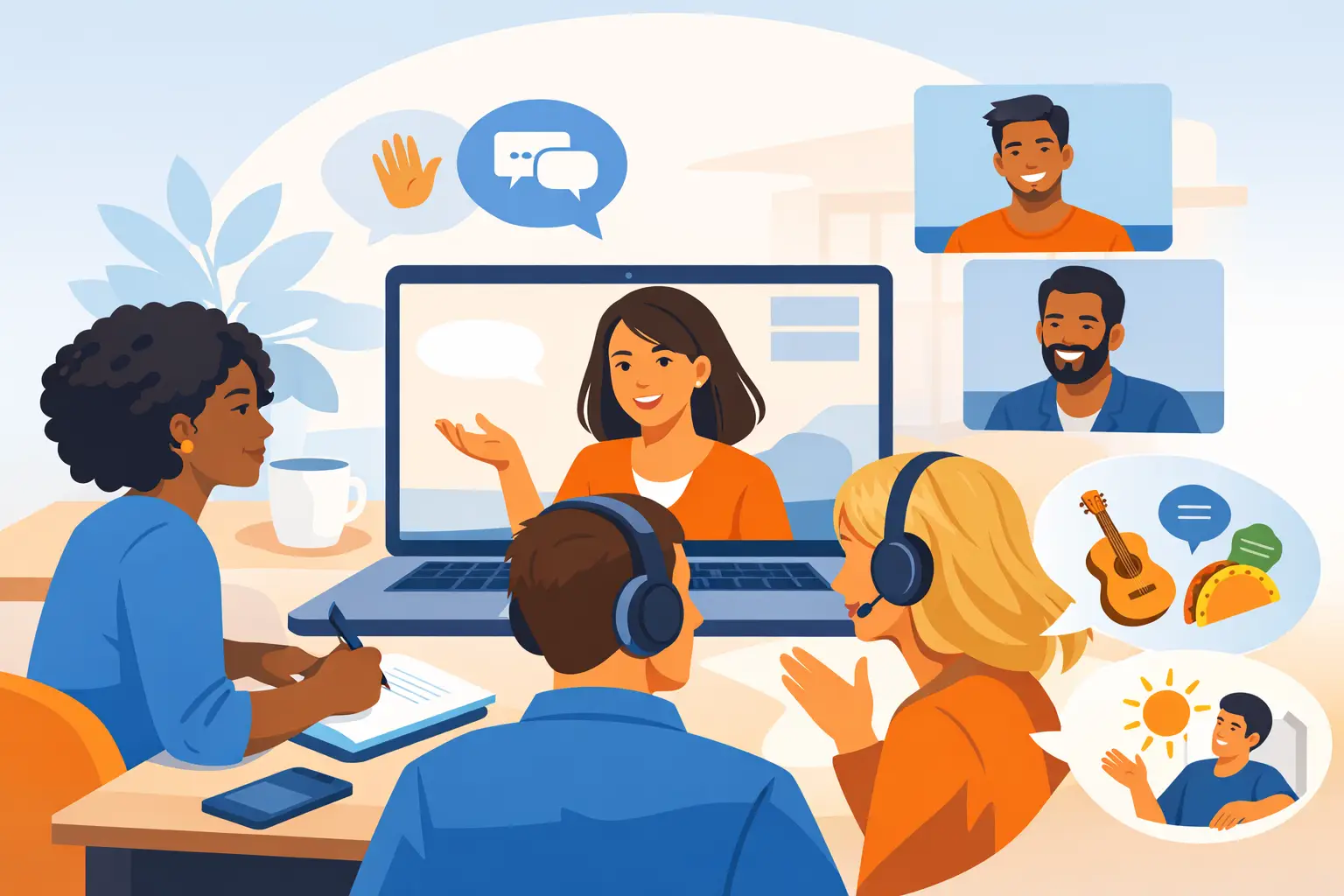
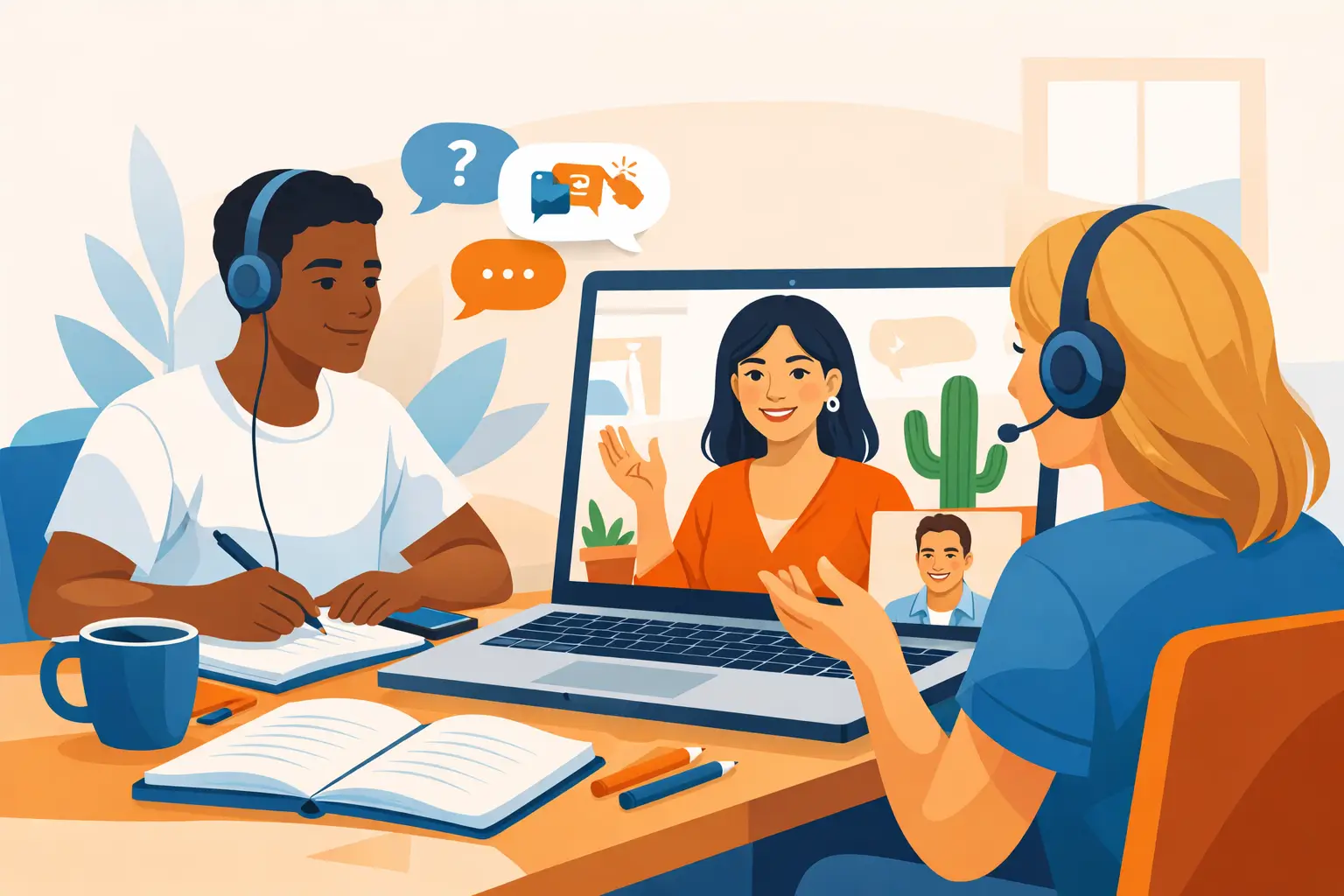
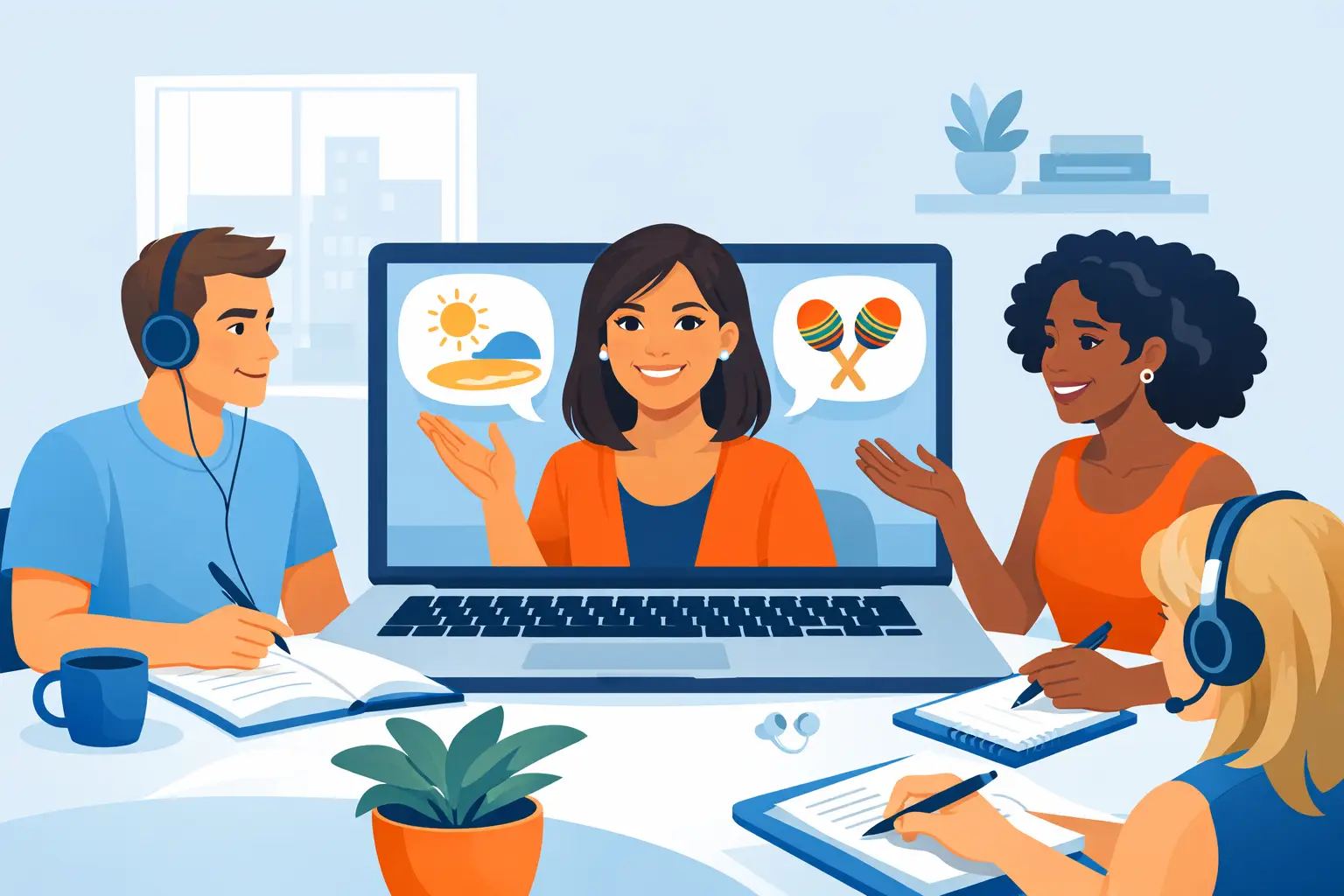
Next, schedule live speaking practice at least once or twice a week. A conversation teacher can adjust the pace, correct you without interrupting every sentence, and bring in topics that matter to you. If your goal is Latin American Spanish, practice with someone who can teach the pronunciation, expressions, and cultural context you will actually encounter.
Listening should be active, not just background noise. Choose content that is slightly challenging but understandable enough that you can follow the situation. Listen once for the overall meaning. Listen again and notice a few phrases worth borrowing. Then say those phrases in your own sentence. This is how language becomes available when you need it.
Finally, make peace with repetition. The first time you learn me gustaría, it is a phrase. The tenth time you use it to order coffee, make a request, or talk about weekend plans, it starts to feel like yours. Fluency is less about dramatic breakthroughs and more about useful language returning often enough to become automatic.
A realistic timeline for adult Spanish fluency
It depends on your starting point, your definition of fluency, and the amount of meaningful practice you get each week. Someone studying consistently with live conversation can often handle basic social interactions within a few months. Reaching comfortable, flexible conversation usually takes longer – often a year or more of steady work.
That answer may sound less exciting than a promise to speak fluently in 30 days. But it is good news. You do not have to put your life on hold until some distant finish line. You can start using Spanish early. Your first win might be introducing yourself without rehearsing. Then you might have a full conversation with a taxi driver, understand a family dinner story, or lead part of a meeting.
Progress is rarely a straight line. One week you may feel like everything is clicking; the next, a fast conversation makes you feel like a beginner again. That is normal. Listening comprehension often develops in layers, and confidence can lag behind ability. Keep showing up, especially after the frustrating sessions.
How to avoid the most common adult learner traps
The first trap is studying only what feels safe. Reading a grammar explanation can feel productive because there is no chance of getting it wrong out loud. Grammar matters, but it should support communication, not replace it. Use the rule, then immediately make it personal: say three true sentences about your own life.
The second trap is trying to sound perfect before speaking. Native speakers do not expect a learner to speak perfectly. Most people respond warmly when you make a genuine effort, especially if you stay curious and ask questions. A simple “¿Cómo se dice…?” can keep you moving when you get stuck.
The third trap is learning generic Spanish when your life calls for something more specific. If you work in real estate, practice property conversations. If you are dating someone from Colombia, learn the affectionate language, food vocabulary, and family questions that come up naturally. Personal relevance makes words easier to remember and gives every lesson a purpose.
A fourth trap is treating all Spanish as identical. Standard Spanish gives you a strong foundation, but cultural fluency matters too. Knowing when usted feels more appropriate, how a phrase changes by country, or why a joke does not translate word for word helps you connect with people, not just construct sentences.
Build a Spanish plan you will actually keep
A strong plan is simple enough to survive a busy week. Set one clear outcome for the next 90 days, such as holding a 10-minute conversation about your work or navigating a trip without switching to English. Choose a few recurring topics, practice them with a live teacher, and review the words and corrections that came up afterward.
At AmigoProf, that human side of learning is the point: live lessons with bilingual native Spanish speakers can be shaped around travel, work, relationships, or the conversations you have been avoiding. The goal is not to impress a computer. It is to help you speak with real people.
Give yourself permission to be a learner in public. Send the voice message. Ask the follow-up question. Tell the story even if you need to pause and find a word. Every honest conversation is proof that Spanish is becoming part of your life, not just another item on your to-do list.